



The Ultimate Guide to Food Metal Detection
Why This Guide Exists
If you make food for a living, a metal detector is not a nice-to-have bolted to the end of the line — it is the physical guarantee behind your HACCP plan, your retailer approval, and your customer’s trust. Yet most plants buy it the wrong way: by datasheet bullet points, then spend months fighting false rejects, failed audits, or packaging they “didn’t know would be a problem.”
This guide is the map. Instead of one shallow overview, we walk the four decisions that actually determine whether a metal detector works on your line:
1. Product effect — why wet, salty or frozen food triggers false rejects, and how to stop them.
2. Compliance — what HACCP, BRC and IFS auditors expect, and how to prove it on paper.
3. Packaging — why aluminum foil blinds a standard detector while metallized film does not.
4. Integration — where the detector goes, how much clear space it needs, and which rejector fits.
Each section is a short briefing with a deep-dive link to the full technical guide. SameGram has spent 16+ years building inline inspection systems — 5,000+ machines across 60+ countries, made in a 4,000 m² factory with in-house CNC, laser cutting and robotic welding. We wrote this from the questions we hear on real plant floors, not from a marketing deck.
1. Understanding Product Effect — Why Wet Food Causes False Rejects
Every metal detector projects an electromagnetic field through its aperture. When product passes, the field shifts; real metal creates a sharp spike the controller flags. The trouble starts with product effect: wet, salty, chilled or freshly cooked food is electrically conductive, so it shifts that field in a way that looks exactly like a metal fragment. The detector cannot tell the product from the contaminant, so good packs get ejected — or, if someone “fixes” it by lowering sensitivity, real metal slips through.
Temperature makes it worse. A chilled batch and a warm batch of the same recipe produce different baselines, so the signal drifts across a single shift. Single-frequency detectors — fine for dry crackers or flour — collapse here: keep sensitivity up and false rejects skyrocket; turn it down and you miss fragments. The engineering answer is multi-frequency detection. Multi-simultaneous systems fire high and low frequencies together and subtract the product signature, leaving a clean reading where ferrous, non-ferrous and stainless steel stand out even inside wet, salty product.
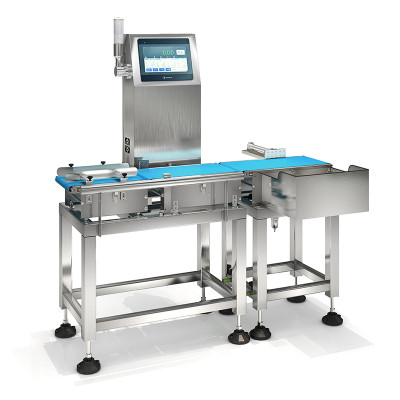
SameGram’s DD-390 dual-frequency conveyor metal detector self-learns each product’s profile and suppresses product effect automatically; the DD-720 high-sensitivity metal detector model reaches Fe 0.5 mm / SUS 0.7 mm, and the DD-500 digital metal detector series switches recipes on a touchscreen for mixed lines.
2. Compliance & Audit Readiness — HACCP, BRC and IFS
A detector is only as defensible as its paperwork. Retailers and certification bodies treat metal detection as a Critical Control Point (CCP): you must set critical limits (sensitivity per metal type and aperture), verify them with certified test pieces at start-up and every few hours, and keep records an auditor can read.
Three things separate a compliant line from a risky one:
● Traceable data. Your system should log reject counts, test-piece results and operator access, and export to MES/ERP via RS-232/485, Ethernet or OPC/Profinet — so the record exists whether or not anyone filled in a clipboard.
● A secure rejection. The reject bin must be lockable and key-controlled, with a confirmation sensor proving the pack actually left the belt. Auditors check this physically, first.
● Recognised certifications. SameGram conveyor detectors carry CE (EMC + MD + LVD) and RoHS, built under an ISO 9001 system and aligned to HACCP, BRC, IFS and GFSI expectations.
Before you sign a purchase order, there are ten questions worth asking your supplier — from guaranteed sensitivity by metal type to auto-learn and remote support.
3. Packaging Compatibility — Aluminum Foil vs Metallized Film
Two packages that look alike on the shelf behave completely differently inside a detection field, and confusing them is the most expensive mistake we see. Metallized film — the whisper-thin aluminium coating on most snack and coffee packs — is weakly and inconsistently conductive. An advanced multi-frequency detector profiles that packaging signal and suppresses it, so you can still inspect after sealing and catch all metal types.
Solid aluminum foil — lidding, foil laminate, foil-wrapped bars — is a continuous conductor. It shields the product and blinds a conventional balanced-coil head; you cannot tune your way out of it. The honest options are: inspect the product before it is sealed in foil, use a true foil-mode detector such as the SameGram DD-220 aluminum foil pack metal detector (Fe 0.6 mm / SUS 2.5 mm, 100+ auto-learn presets), or, where you also need glass, stone or bone, add an X-ray inspection system.
A trustworthy supplier tells you all three, not just the one they sell. SameGram designs the full ecosystem — multi-frequency heads for film, foil-mode heads for foil, and X-ray inspection systems where density matters — so the technology fits the pack instead of the other way around.
4. Automated Line Integration — Placement, Metal-Free Zone & Rejectors
Most sensitivity complaints we hear have nothing to do with the detector head. The head is fine; the integration isn't. A conveyorized detector is a five-stage loop — convey, detect, process, reject, discharge — and weakening any link costs you both ways at once.
Start with placement: mark where metal can enter the product (mixers, slicers, fillers), then typically inspect twice — upstream in bulk and end-of-line after sealing. Size the metal-free zone before the conveyor is built: roughly 1.5× the aperture height of clear space each side for fixed metal, about 2× for moving metal such as rollers and reject arms. That is why an inspection conveyor runs 2–4 metres, not the width of the head.
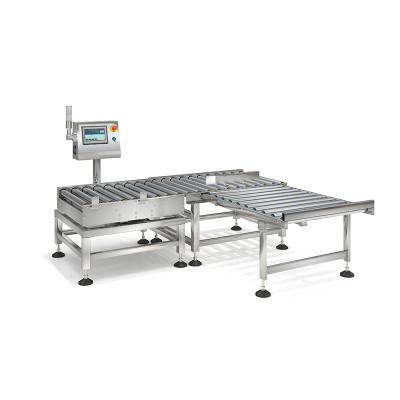
Match the rejector to the pack, not the budget: air jet for light pillow packs, swing-arm flap for cartons, pusher for heavy rigid containers, drop-gate for sachets. The bin must be lockable and QA-controlled. Every SameGram detector ships with standard I/O, RS-232/485 and Ethernet, plus optional OPC/Profinet for direct MES/ERP tie-in. Where floor space is tight, the SCM-4530L2 combination unit weighs and inspects in one frame.
5. Choosing by Application — Meat & Poultry, Bakery, Ready Meals
Different product categories stress a detector in different ways, so a single “metal detector” page cannot serve them all. Three lines we see constantly:
● Meat & Poultry — wet, salty, often chilled. Product effect is the enemy; the DD-390 dual-frequency metal detector with self-learning keeps good packs moving. IP65 washdown construction survives daily high-pressure sanitation.
● Bakery & Snacks — mostly dry, but many lines now use metallized film. Multi-frequency suppression (DD-390 / DD-720) inspects through the pack; the DD-500 digital metal detector series handles frequent recipe changeovers.
● Ready Meals — frequently foil trays or retort pouches. The DD-220 foil-mode metal detector inspects through solid foil for ferrous and stainless contaminants, with X-ray closing the gap for denser hazards.
6. The SameGram Food Metal Detector Range at a Glance
Senior buyers weight hard numbers over “high sensitivity.” The table below lists representative performance at a stated aperture — your weakest metal type is your real detection limit.
| Model | Best for | Technology | Typical sensitivity (Fe / Non-Fe / SUS)* | Key note |
Wet, salty, frozen & metallized film | Dual-frequency + self-learning | Fe ≥0.8 / Non-Fe ≥1.2 / SUS ≥1.5 mm (400×120 mm) | Auto-learns recipes; IP65 washdown | |
High-sensitivity dry & packaged goods | High-sensitivity conveyor | Fe ≥0.5 / SUS ≥0.7 mm | Fine contaminant detection | |
Mixed lines, frequent changeovers | Digital, touchscreen | Digital auto-set per recipe | 100+ recipes, instant switching | |
Aluminum foil & metallized film | Foil-mode multi-spectrum DSP | Fe 0.6 / SUS 2.5 mm | 100+ presets; IP65 option | |
End-of-line weigh + inspect | Combo checkweigher + detector | Weigh 1–2000 g (±0.3–1 g) | One footprint, dual rejectors | |
Powders & granulates | Gravity-fall detector | Through drop-pipe before filler | Free-fall, no belt required |
* Sensitivity is aperture-dependent: larger apertures lower detectable size. Published figures at a stated aperture always beat vague “high sensitivity” claims. Verify on your actual product — see the free test below.
7. Prove It on Your Own Product — Free Sensitivity Test
Specifications on paper are one thing; your recipe and your film are another. SameGram offers free sample testing: send us your product in its actual packaging and our applications team runs it on the matching configuration, then returns a documented sensitivity report for Fe, Non-Fe and stainless steel — before you commit to anything. It is the single best way to remove guesswork from a purchase this important.
Frequently Asked Questions
Q: Can one metal detector handle every product on my line?
A: Often yes through recipe switching, but foil and metallized film need different technology than clear-film or dry product. The DD-390 covers wet and metallized-film lines; the DD-220 is purpose-built for solid foil. Plan for the packaging you will run in two years, not just today.
Q: What sensitivity should I specify?
A: Always demand numbers split by Fe, non-Fe, and stainless steel at your actual aperture size. A detector is only as good as its weakest metal type — stainless is the hardest to find and sets your real limit.
Q: How often should test pieces be run?
A: With certified ferrous, non-ferrous and stainless spheres: at start-up, every 2–4 hours during production, on product changeover and at end of run — testing through the pack in its worst-case position.
Q: Do you support integration with our existing line?
A: Yes. Every SameGram detector uses standard I/O with RS-232/485, Ethernet and optional OPC/Profinet for MES/ERP, and pairs with air-jet, flap, pusher or drop-gate rejectors plus checkweighers and labelers.
About SameGram

SameGram Equipment Co., Ltd. is a specialist in dynamic checkweighing and inline inspection — metal detection, checkweighing, X-ray and labeling — for food, pharmaceutical, logistics and cosmetics production. Our 4,000+ m² factory runs CNC machining, laser cutting and robotic welding under a documented quality program, with 5,000+ delivered systems worldwide and a 16+ year R&D team behind every detector. Every machine ships with a 12-month warranty and lifetime technical support.
Hot-Sale Metal Detector
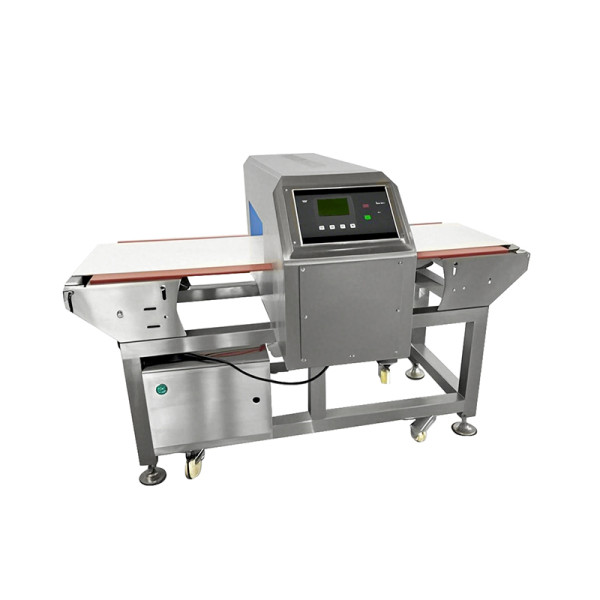
DD-720 is a belt conveyor metal detector with unmatched sensitivity, ideal for food and pharma.
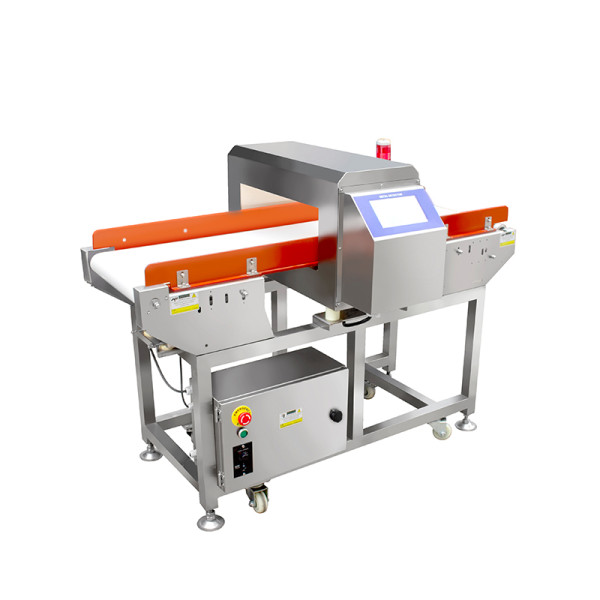
DD-500 Series is an advanced conveyor belt metal detector using smart touch-screen control. Ideal for food production and other
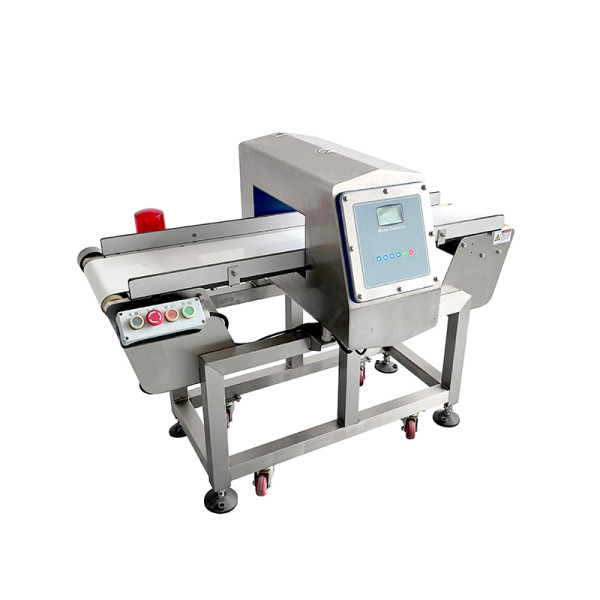
Customizable metal detector for conveyor belt with dual frequency, high sensitivity, and strong anti-interference.
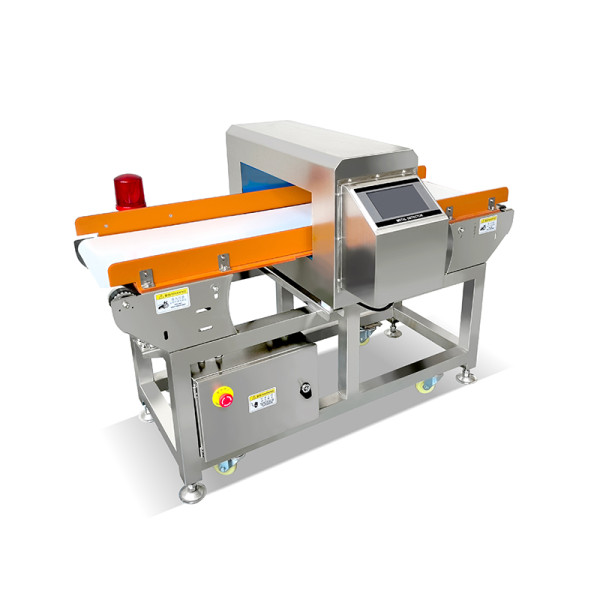
DD-360 Series is a food-grade metal detector conveyor system. Ideal for food industry and food production lines.
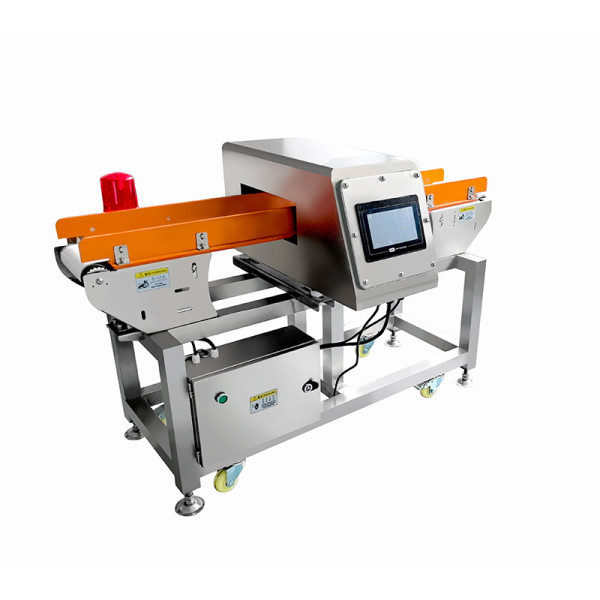
DD-220 is a food conveyor metal detector designed for aluminum foil packaging,with high sensitivity and easy integration.