



Can a Metal Detector Inspect Food in Aluminum Foil? | SameGram
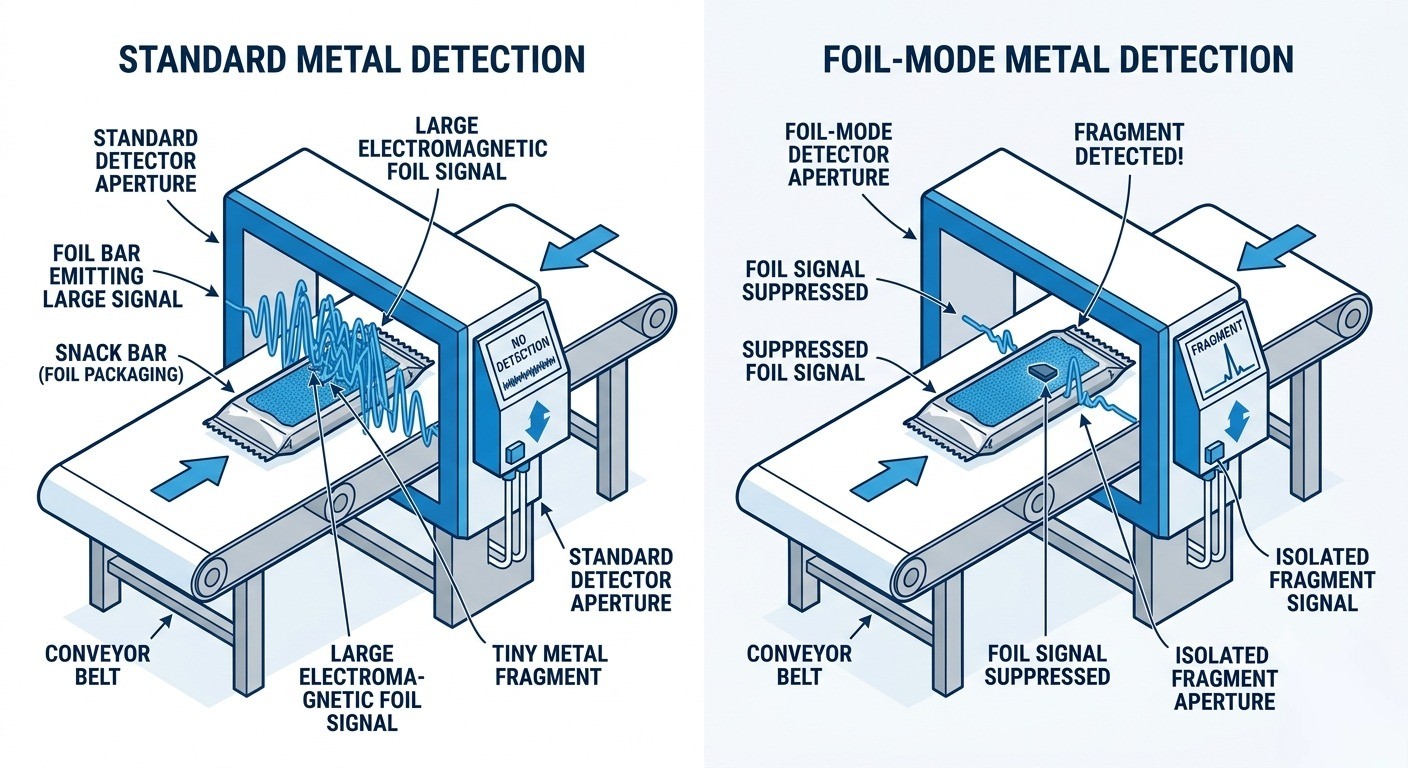
The short answer: a standard metal detector cannot reliably inspect food sealed in aluminum foil, but a purpose-built aluminum foil metal detector can — by using a dedicated foil-detection channel that reads the contaminant through the packaging instead of being blinded by it. If your line runs chocolate bars, ready meals, retort pouches or foil-tray products, this single distinction decides whether your foreign-object control actually works or just buries you in false rejects.
In this guide we explain why foil defeats ordinary detectors, how a foil-mode conveyor metal detector solves it, how aluminum foil differs from metallized film, and how to place, calibrate and validate the system so it passes HACCP, BRC and IFS audits.
Aluminum Foil vs. Metallized Film — Don’t Confuse the Two
A common buying mistake is treating aluminum foil and metallized film as the same problem. They are not. Metallized film is a plastic film with a microscopic metal coating; its signal is light enough that an advanced multi-frequency metal detector can separate packaging from contaminant and still catch all metal types. Pure aluminum foil is heavier and fully conductive, so the most reliable strategies are: (a) inspect before the product is sealed in foil, (b) use a true foil-mode metal detector for aluminum foil packaging for ferrous and many stainless contaminants, or (c) for full detection of non-ferrous and dense contaminants, pair the line with an X-ray inspection system.
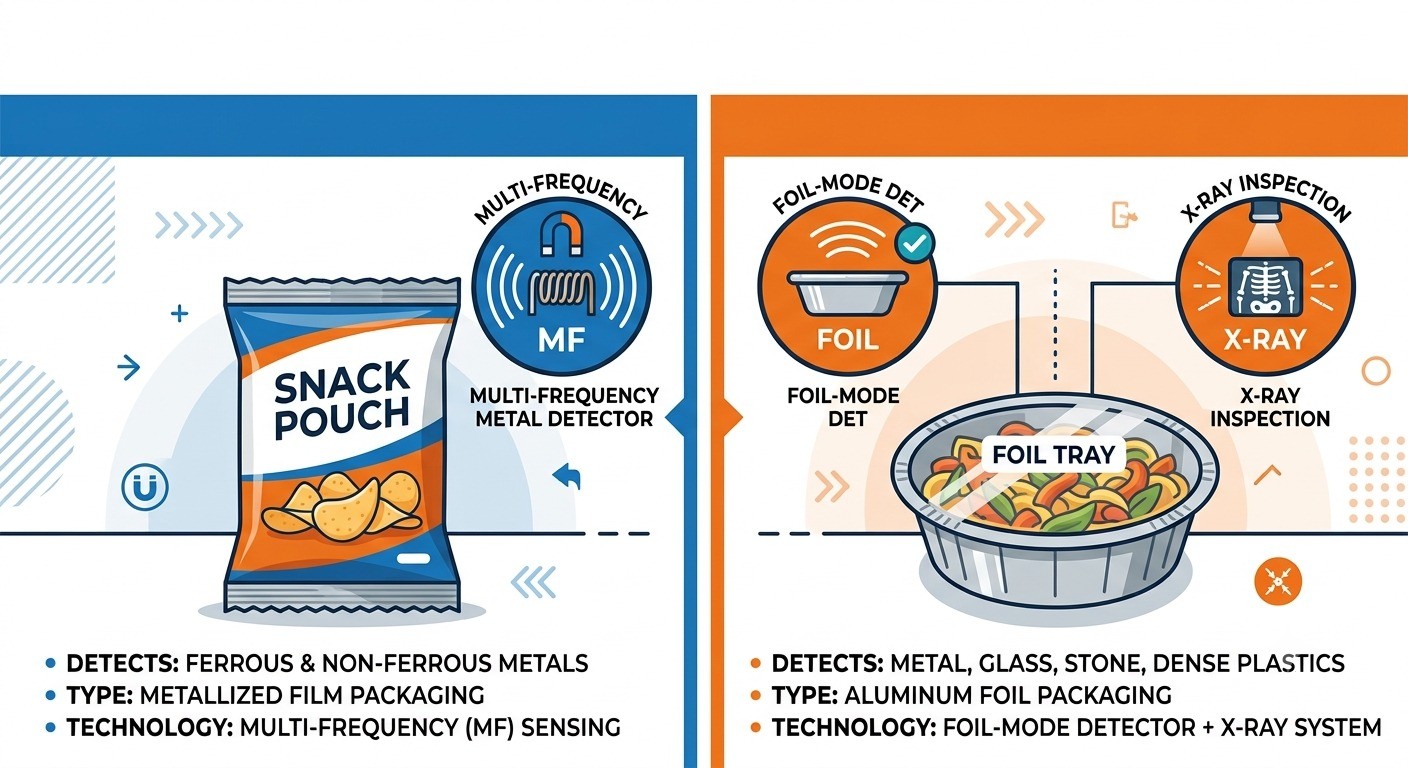
This is exactly why SameGram offers a complete quality-control ecosystem rather than a single box. Where foil-mode detection fits, the DD-220 leads; where you also need to catch glass, stone or bone, our X-ray inspection systems close the gap. Choosing the wrong technology wastes budget and still leaves a recall risk.
Where the Detector Sits in Your Production Workflow
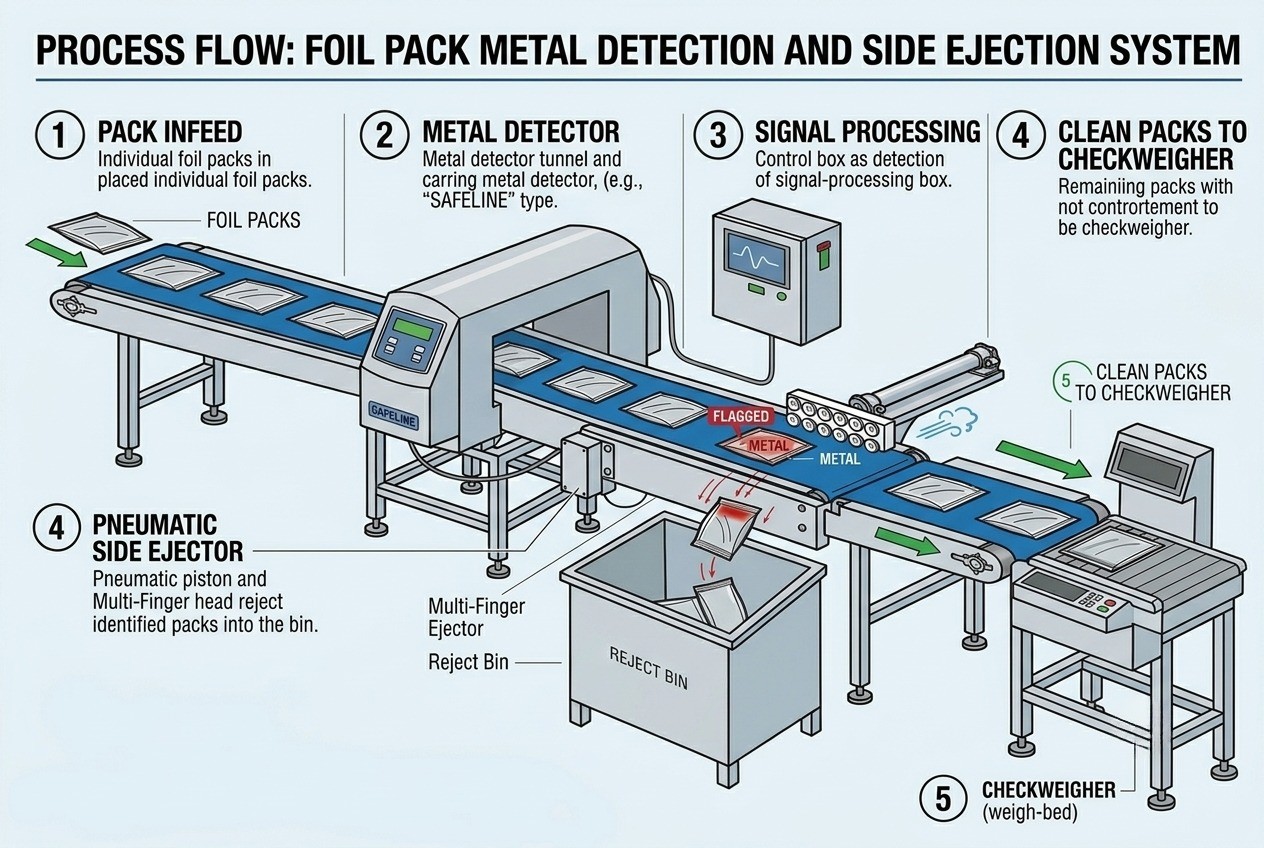
A conveyor metal detector is one station in a larger inline flow. The standard sequence is:
1. Product conveyance — the pack is carried into the detector aperture on the belt.
2. Metal detection — the coil field scans for ferrous, non-ferrous and stainless contaminants.
3. Data processing — the controller compares the live signal to the learned product profile and decides pass or reject.
4. Reject — if contamination is confirmed, the reject device removes that specific pack.
5. Output — clean product continues on the belt to the next station (checkweigher, labeler or case packer).
Placement matters. Put the detector right after sealing for post-pack inspection, keep conveyor speed steady, and keep the surrounding metal-free zone clear of rollers, frames or motors that could couple into the field. SameGram detectors integrate over standard I/O, RS-232/RS-485, Ethernet and optional OPC/Profinet, so test results and reject counts feed straight into your MES or ERP for audit-ready records. They also pair with our dynamic checkweighers and coding and labeling systems.
Picking the Right Reject Mechanism
The reject device must match the pack weight and format, or you trade false rejects for jams. Light pillow bags suit an air-blast (air jet); trays and heavier foil packs suit a swing-arm flap; sachets and pouches suit a drop-gate; thin or fragile items suit a retracting belt. All SameGram reject options drop into a locked, sealed bin so removed product cannot re-enter the line — a detail auditors specifically check.
Passing HACCP, BRC and IFS Audits
A detector is only as good as its validation paper. Treat metal detection as a Critical Control Point (CCP): set critical limits (for example Fe / Non-Fe / SUS sizes per aperture), verify with certified, traceable test pieces at start-up, every 30–60 minutes, on product change and at shift end, and keep logs for at least two years. The DD-220 is built to IFS and HACCP expectations, with auto-learn profiles and digital records that satisfy retailer Codes of Practice.
SameGram’s quality system is independently backed by conformity certifications you can show auditors directly:
● ROHS Certification — view the SameGram Conveyor Metal Detector ROHS certificate
● EMC + MD + LVD Certification — view the SameGram Conveyor Metal Detector EMC/MD/LVD certificate
The SameGram DD-220 Metal Detector in Practice
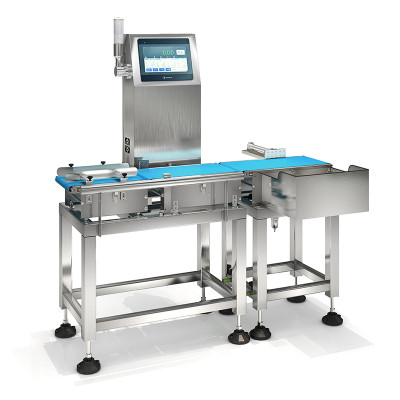
Across bakery, convenience food, seafood and meat lines, the DD-220 earns trust because it fits where space and speed are tight: 304 stainless-steel open frame, optional IP65 washdown, 27 m/min belt speed, body 1400×750×1100 mm, and customizable aperture heights and widths. It handles foil-wrapped biscuits, frozen ready meals in foil trays, marinated meat pouches and foil-sachet cosmetics without false-triggering. See the full specification and application notes on the DD-220 product page, and explore our wider conveyor metal detector range for non-foil lines.
It is proven in specific sectors you can read about directly:
Why Food Manufacturers Work With SameGram
SameGram is a specialist in dynamic checkweighing and inline inspection, with 16+ years of R&D, a 4,000+ m² factory and 5,000+ installed success stories across food, pharma, logistics and cosmetics. Every system ships with 12 months warranty and lifetime technical support, and we offer free on-site sample testing so you get a written sensitivity report on your actual product and film before you buy. That evidence — not a marketing claim — is what survives an audit and a recall. See our full product range or the SameGram homepage.
Frequently Asked Questions
Can a regular metal detector find metal inside aluminum foil?
No. Ordinary balanced-coil detectors read the foil as the contaminant. You need a foil-mode detector or X-ray.
What metals can a foil metal detector find?
Ferrous, non-ferrous and stainless steel. Detection of non-ferrous metals inside pure foil is weaker than ferrous, which is why X-ray is added when full coverage is required.
Is X-ray better than a foil metal detector?
X-ray sees more contaminant types and penetrates foil, but costs more and needs shielding. For metal-only control, a foil-mode detector is cheaper, faster and easier to maintain.
Get a Written Sensitivity Report on Your Foil Pack
Aluminum foil does not have to be a blind spot. With the right foil-mode conveyor metal detector — placed correctly, calibrated to your film and validated as a CCP — you protect customers and pass audits without drowning in false rejects. Contact SameGram for a free test on your foil-packed product and a written sensitivity report.
Hot-Sale Conveyor Metal Detector
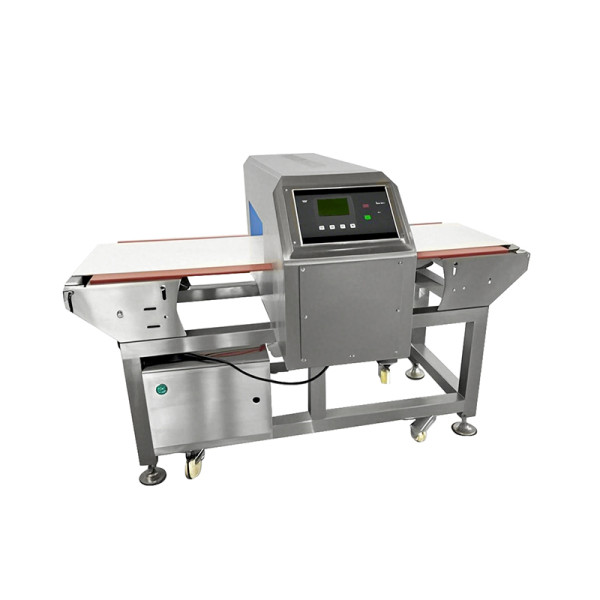
DD-720 is a belt conveyor metal detector with unmatched sensitivity, ideal for food and pharma.
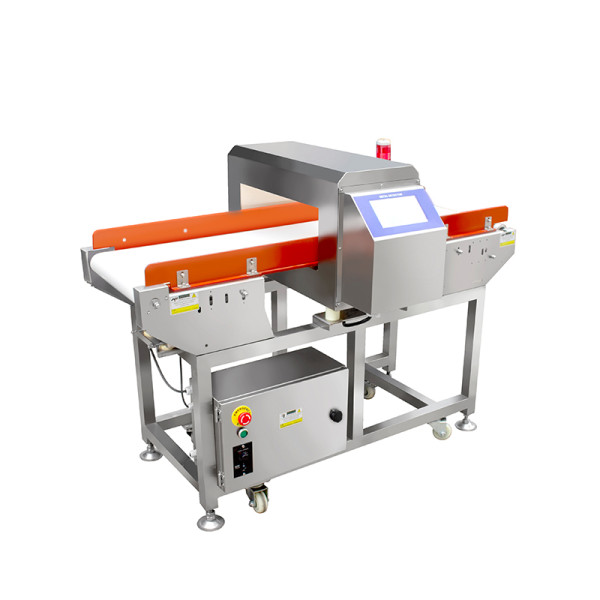
DD-500 Series is an advanced conveyor belt metal detector using smart touch-screen control. Ideal for food production and other
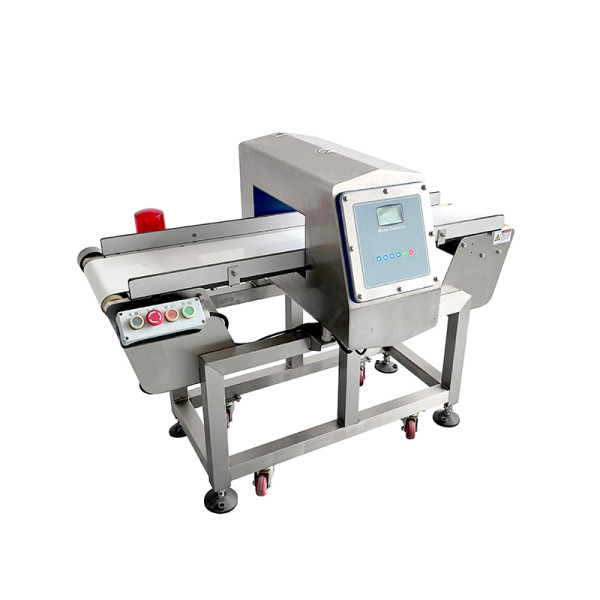
Customizable metal detector for conveyor belt with dual frequency, high sensitivity, and strong anti-interference.
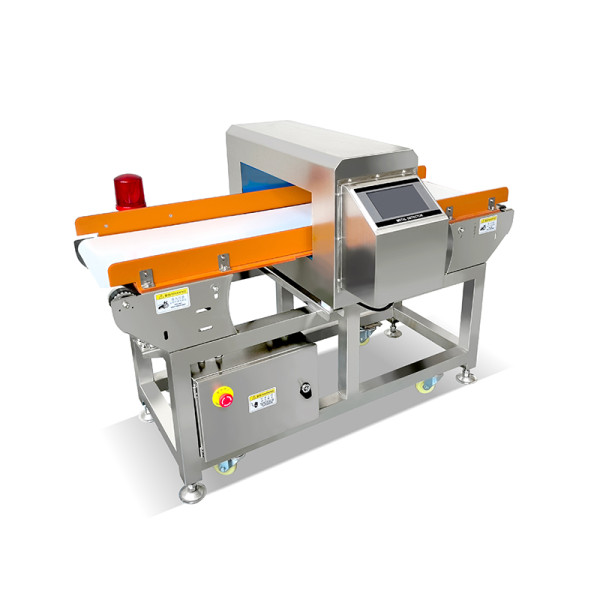
DD-360 Series is a food-grade metal detector conveyor system. Ideal for food industry and food production lines.
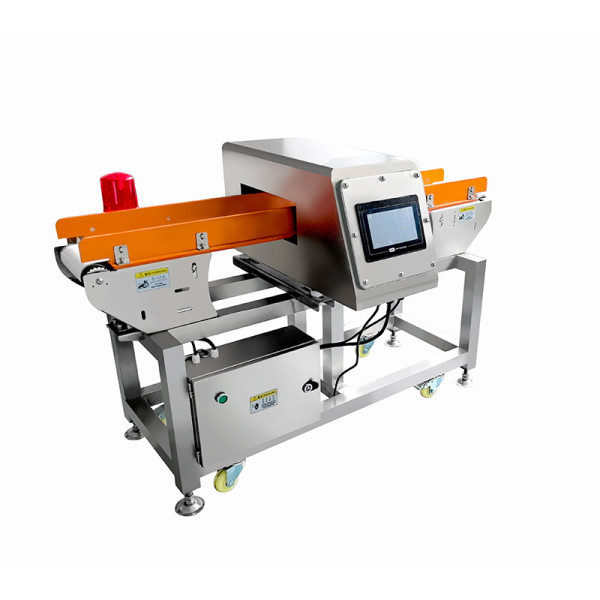
DD-220 is a food conveyor metal detector designed for aluminum foil packaging,with high sensitivity and easy integration.