



BRC/HACCP Food Metal Detector Buying Checklist
The 2026 compliance & selection checklist for plant managers, QA leads and purchasing directors
If you run a food production line, you already know the uncomfortable truth: the wrong metal detector does not fail quietly. It fails loudly — with false rejects, production downtime, wasted product, an unhappy auditor, and in the worst case, a recall that outlives the batch. For a plant manager or quality director, choosing a BRC/HACCP food metal detector is not a purchasing line item. It is a brand-protection decision.
At SameGram, we have spent 16+ years building inline inspection systems for food plants across 60+ countries. This checklist distills the questions we wish every buyer would ask before signing the purchase order — so your next detector protects your Critical Control Point (CCP) instead of just ticking a box.
This guide is part of our Ultimate Guide to Food Metal Detection & Compliance (hub page). For the technical deep-dive on defeating false rejects, see our guide to overcoming product effect; for packaging choices, see aluminum foil vs. metallized film inspection.
How a Conveyor Metal Detector Actually Protects Your Line
Before the questions, it helps to picture the job the machine has to do. A conveyorized food metal detector works in a simple, repeatable loop:
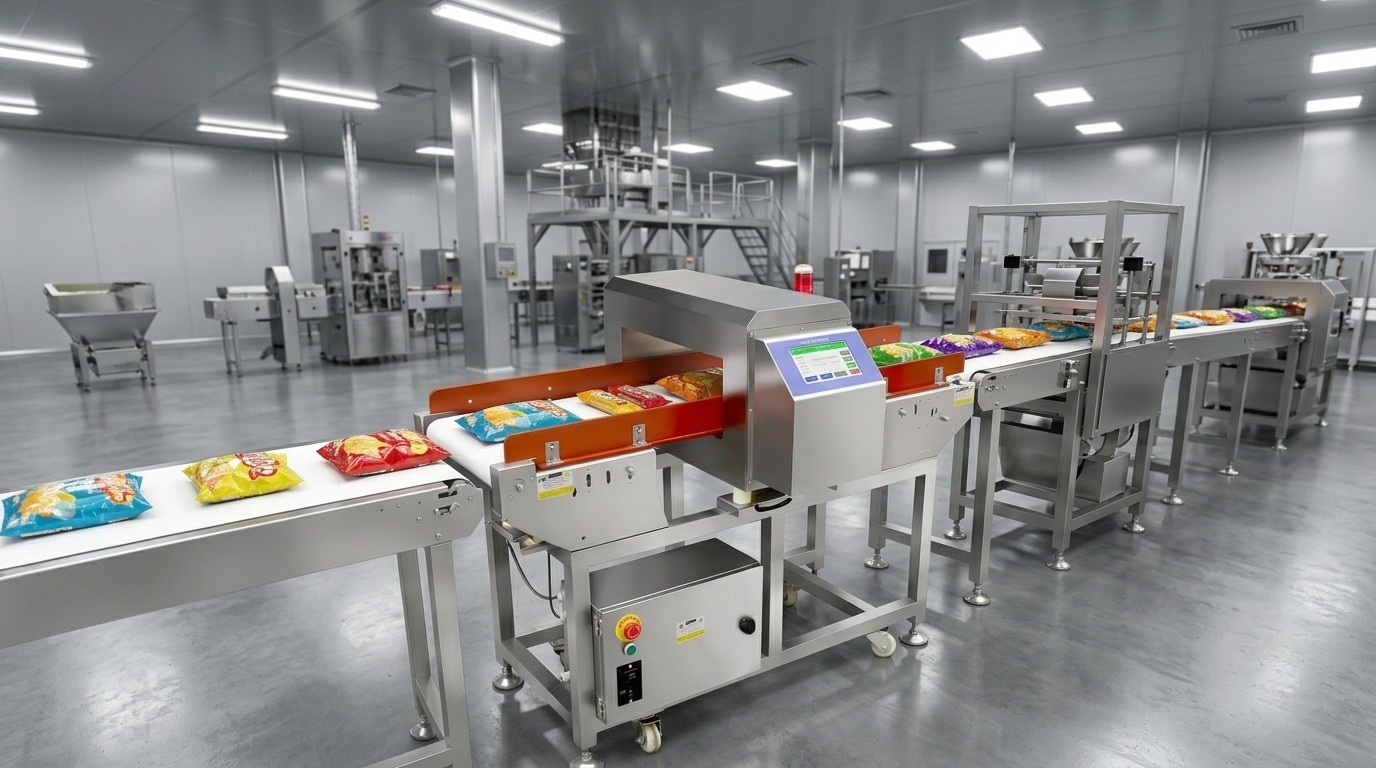
1. Conveying — Product travels through the detector aperture on a food-grade belt at a stable line speed.
2. Detection — The search head emits its inspection field, watching for disturbances from ferrous, non-ferrous or stainless-steel contaminants.
3. Data processing — The controller separates a real metal signal from the "product effect" (natural conductivity of salt, moisture or temperature) and decides pass or reject.
4. Reject — A reject device (flap, pneumatic pusher or air blast) diverts the offending pack into a locked bin so it cannot re-enter the line.
5. Pass / transfer — Clean product continues to the next stage, or to a checkweigher and case packer.
Every question below is really about keeping this loop honest under real factory conditions — wet floors, salty recipes, fast changeovers and a clipboard-wielding auditor.
The 2026 Checklist: 10 Questions Before You Buy
1. How does it handle the product effect on salty, wet or frozen foods?
High salt, high moisture and temperature swings make food conductive, which fools basic detectors into false rejects. Ask specifically for multi-frequency or self-learning technology. The SameGram DD-390 dual-frequency conveyor detector runs two frequencies simultaneously and auto-learns each product’s signal, suppressing product effect so good packs keep moving. If a supplier will not test your actual recipe, walk away.
2. Can it inspect products in aluminum foil or metallized film?
Aluminum is metal, so it blinds a standard detector. For metallized film, a foil-compatible machine such as the SameGram DD-220 (Fe Φ0.6 mm, SUS Φ2.5 mm) inspects ferrous contamination while ignoring the pack. For pure aluminum foil trays, the honest answer is usually an X-ray inspection system instead. A trustworthy supplier tells you both, not just the one they sell.
3. Will it integrate with your existing line and reject mechanism?
Your detector must sit inside a metal-free zone (MFZ) — no moving rollers or frames in the aperture — and pair with the right rejector: flap for light packs, pneumatic pusher for rigid containers, air blast for free-flowing product. SameGram conveyor detectors use standard I/O and link directly to rejectors and checkweighers, and throat-style heads mount on VFFS formers to catch metal before sealing.
4. What detection sensitivity can you guarantee — by metal type and aperture?
Always demand numbers, split by Fe, Non-Fe and stainless steel (SUS), at your actual aperture size. Vague "high sensitivity" tells you nothing. As a benchmark, the DD-390 specifies Fe ≥0.8 mm, Non-Fe ≥1.2 mm, SUS ≥1.5 mm at a 400×120 mm aperture; the DD-720 high-sensitivity model reaches Fe Φ0.5 mm, SUS Χ0.7 mm. Your detector is only as good as its weakest metal type.
5. Can it survive your washdown and sanitation routine?
Meat, seafood and dairy lines get hosed daily with hot water, foam and chemicals. Specify an IP65-rated, full stainless-steel, food-grade construction. SameGram detectors use sealed enclosures and corrosion-resistant frames that hold calibration through repeated sanitation instead of drifting or shorting out.
6. Does it support auto-learn and performance verification?
Lines change products constantly; manual retuning wastes hours. Look for auto-learn product compensation plus scheduled performance verification (PV): test reminders, logged results and audit-ready reports. The DD-390 self-learns new recipes on the fly while holding sensitivity, turning compliance from a quarterly scramble into a quiet background process.
7. Do you get remote diagnostics and local support?
When the line stops at 2 a.m., an email ticket is no comfort. SameGram offers remote diagnosis, spare-part supply and a 72-hour response commitment, backed by 16+ years of OEM/ODM manufacturing and a 4,000+ m² in-house factory.
8. What traceability data does the system log?
Auditors love data, and so should you. Your HACCP food metal detector should record event history, reject counts, test-piece verification and operator access changes. SameGram systems export logs via USB and connect to MES/ERP through RS-232/485, Ethernet or OPC/Profinet — proving you manage the detector, not just own it.
9. How secure is the rejection system?
Rejection is procedural, not just mechanical. Confirm reject confirmation sensors, lockable reject bins and alarm escalation if a reject fails. A proper system physically prevents contaminated product from re-entering the good flow — the whole point of the CCP. SameGram rejectors integrate this confirmation logic at the controller level.
10. Is it certified for BRC, HACCP, IFS and GFSI?
Retailers no longer negotiate food safety. Your detector must sit inside a documented HACCP plan and carry the right certifications. SameGram conveyor metal detectors are built to align with HACCP, BRC, IFS and GFSI frameworks and carry CE (EMC+MD+LVD) and RoHS compliance — see the certificates below. Compliance is designed in, not bolted on.
SameGram Models Built for These Exact Questions
Different lines need different answers, and SameGram designs each model around a real pain point:
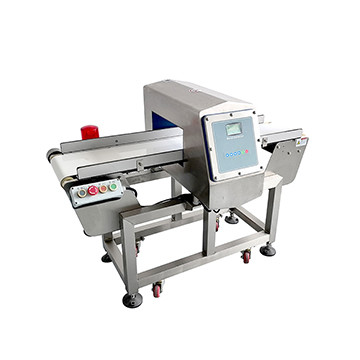
Best for wet, salty or frozen foods; suppresses product effect and self-learns recipes. Fe ≥0.8 / Non-Fe ≥1.2 / SUS ≥1.5 mm.
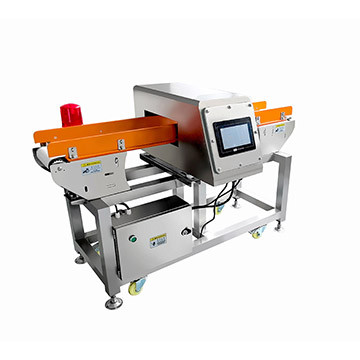
Inspects metallized-film and foil-packaged snacks and ready meals where standard heads fail.
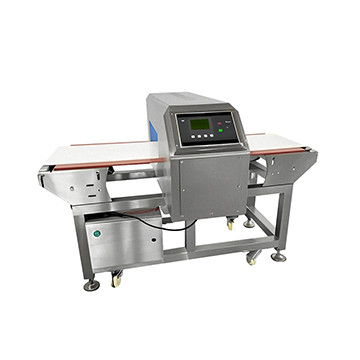
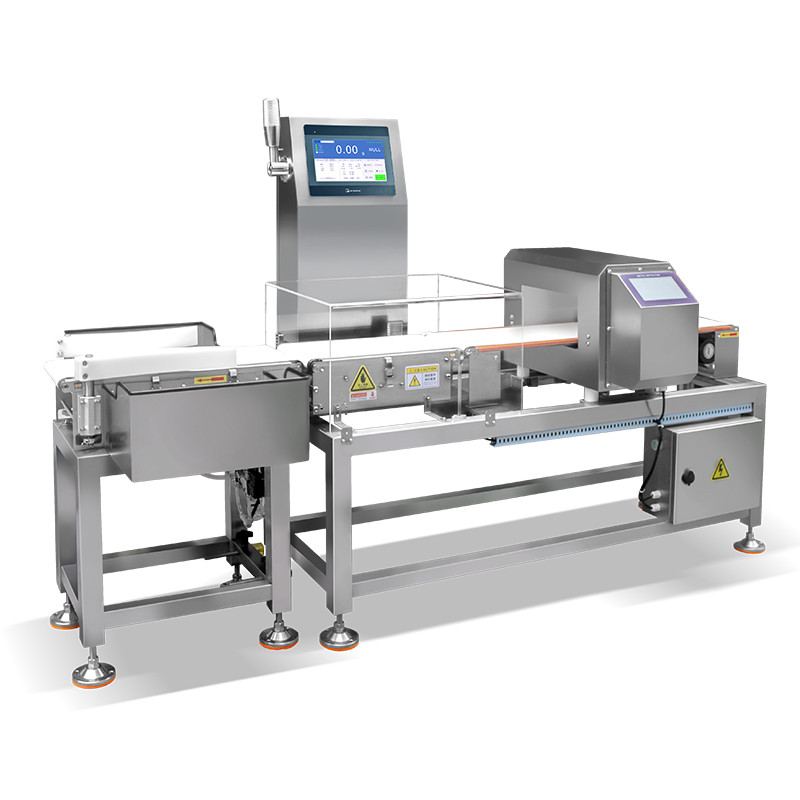
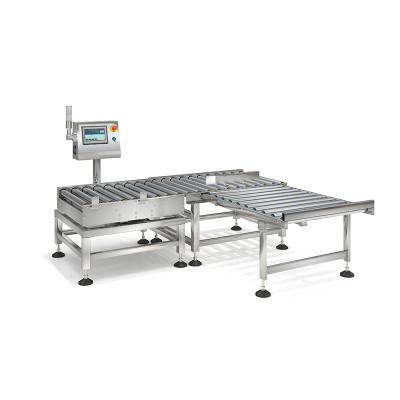
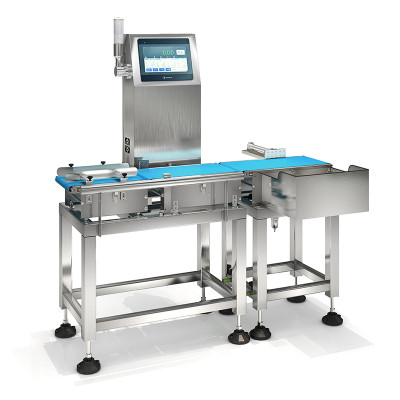
Saves floor space by weighing and inspecting in one pass, ideal for end-of-line compliance.
Certifications & Compliance You Can Show Your Auditor
SameGram conveyor metal detectors carry independent certifications you can present directly during a BRC or IFS audit:
● RoHS — View the SameGram Conveyor Metal Detector RoHS Certification
● CE (EMC + MD + LVD) — View the SameGram Conveyor Metal Detector EMC/MD/LVD Certification
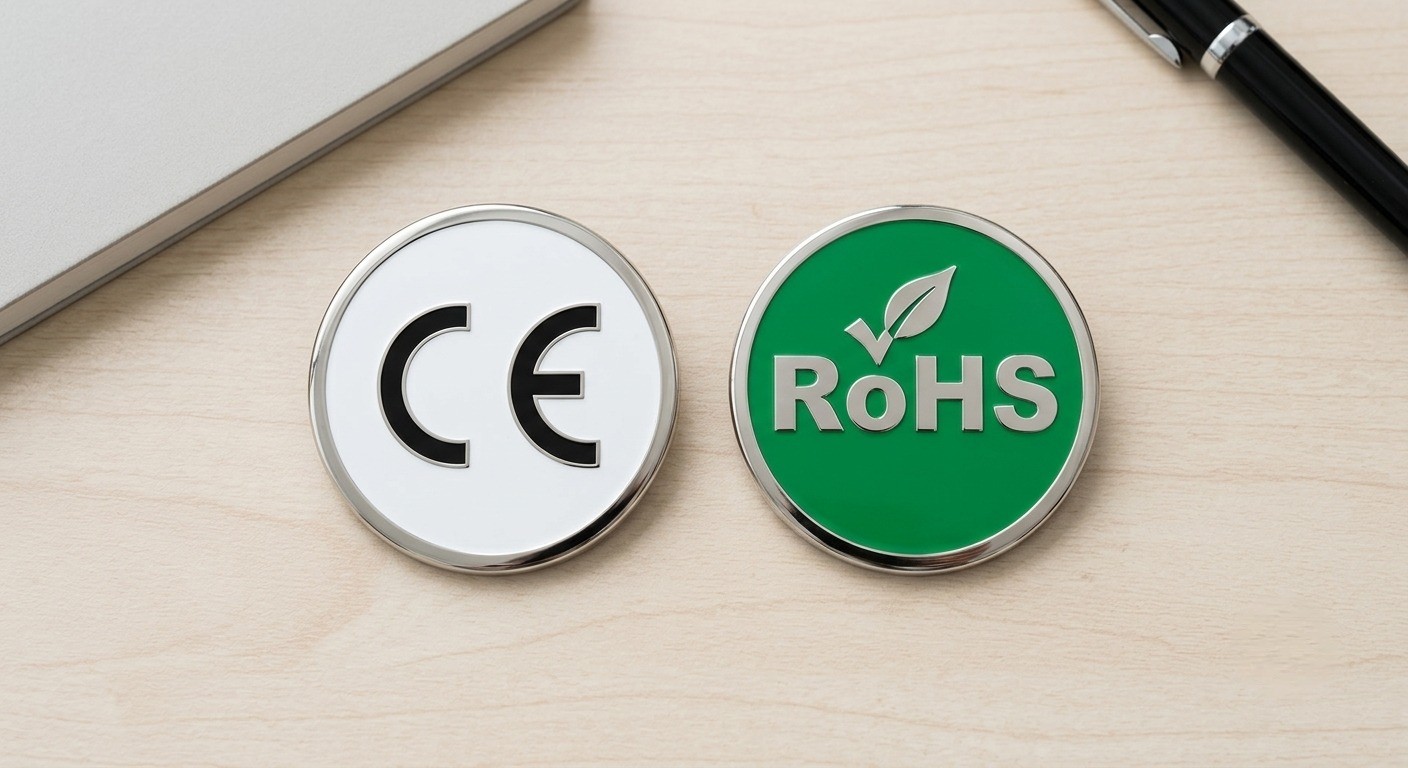
Combined with our ISO 9001 quality system and IQC/PQC/FQC/FAT multi-stage inspection, these back every machine we ship.
Get a Free Sensitivity Report on Your Own Product

Specifications on paper are one thing; your recipe is another. SameGram offers free sample testing: send us your product and we return a video and a data report showing the real achievable sensitivity on your line. It is the single best way to remove guesswork before you buy. Request your free test or talk to our engineers about your application.
Looking for your specific product? See our Metal Detector Solution pages, or pair detection with X-ray and checkweighing solutions for full-line food safety.
Hot Sale Metal Detector
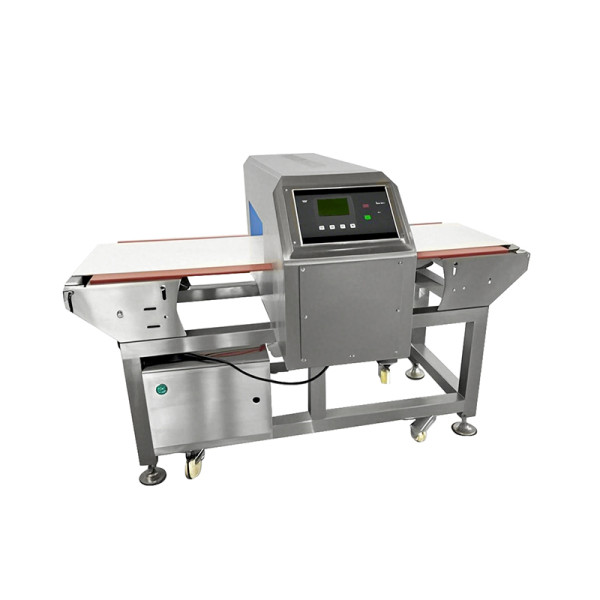
DD-720 is a belt conveyor metal detector with unmatched sensitivity, ideal for food and pharma.
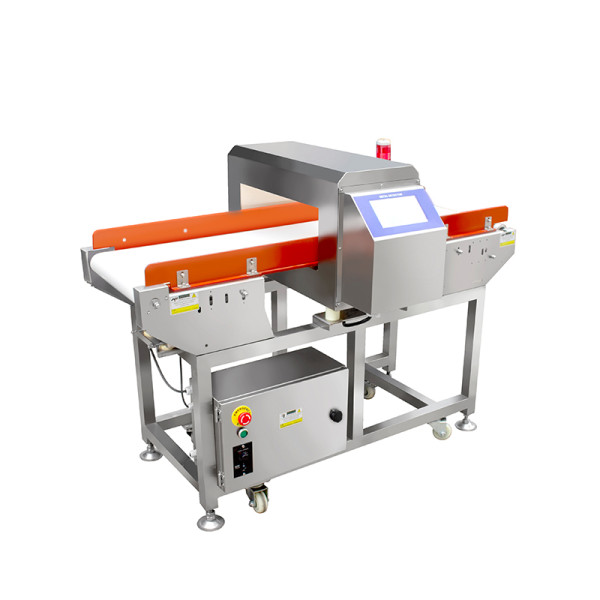
DD-500 Series is an advanced conveyor belt metal detector using smart touch-screen control. Ideal for food production and other
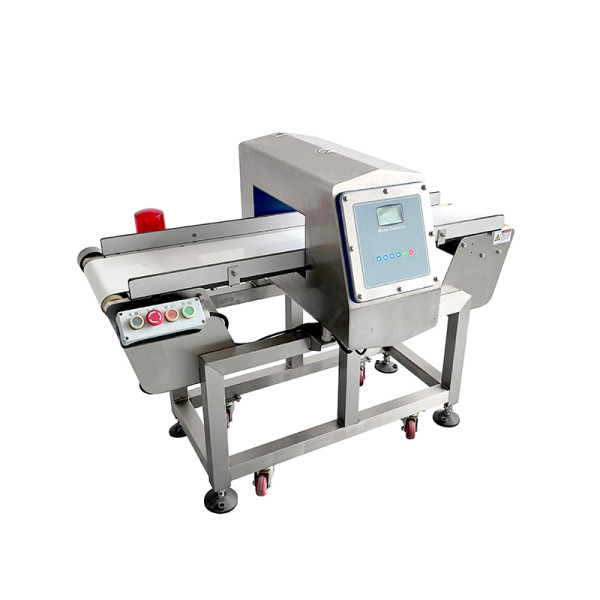
Customizable metal detector for conveyor belt with dual frequency, high sensitivity, and strong anti-interference.
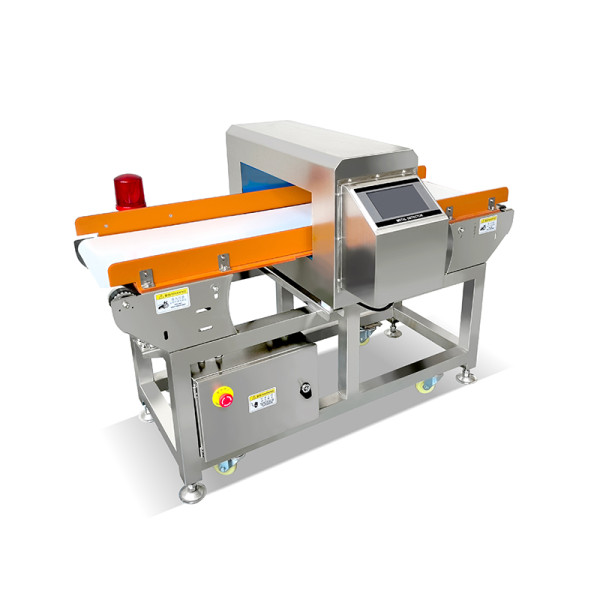
DD-360 Series is a food-grade metal detector conveyor system. Ideal for food industry and food production lines.
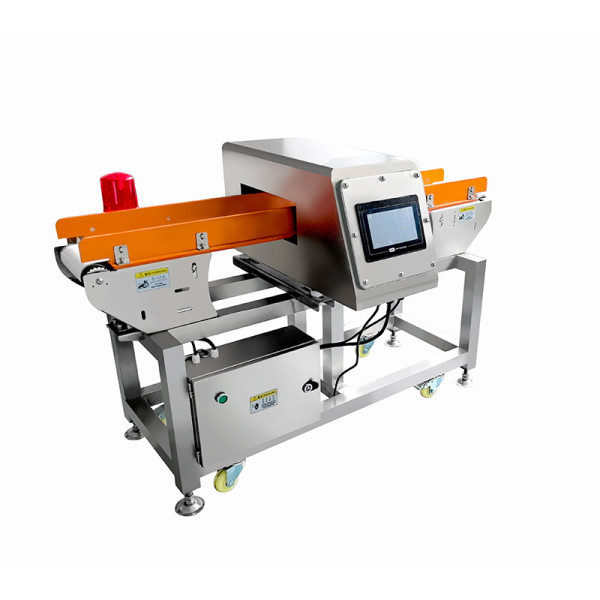
DD-220 is a food conveyor metal detector designed for aluminum foil packaging,with high sensitivity and easy integration.