




Prevent False Rejects in Wet Food Metal Detection | SameGram
If you run a wet food production line — fresh meat, dairy, pickled vegetables, ready meals — you have probably stared at your metal detector's reject bin and wondered why it is full of perfectly good product. False rejects are one of the most frustrating problems in food metal detection, and wet products make the situation exponentially worse. Every unnecessary rejection means wasted product, disrupted throughput, and operators who slowly lose confidence in the inspection system.
The good news? False rejects in wet food are not random. They are predictable, diagnosable, and — with the right detection technology — largely preventable.
What Is a False Reject?
A false reject occurs when a metal detector ejects a product that contains no metal contamination at all. The system believes it detected something — but nothing is there. This differs from a true contamination event, where actual metal is present and correctly identified. With false rejects, the detector reacts to signals that resemble metal but originate from the product itself or the surrounding environment.
In wet food lines, that "something else" is almost always product effect.
Product Effect: The Core Challenge in Wet Food Detection

Metal detectors generate an electromagnetic field inside the aperture. When a product passes through, the field changes. If metal is present, it creates a distinct signal spike flagged as contamination.
Here is the problem: wet foods — meat, fish, cheese, sauces, pickled items — contain high moisture and salt. These conductive materials interact with the electromagnetic field in ways that mimic the signature of metal contamination. The detector struggles to distinguish whether the signal comes from the product itself or from a metal fragment inside it.
This is called product effect — the single biggest cause of false rejects in wet food manufacturing. Temperature makes it worse: chilled or frozen products exhibit different electrical properties than warm ones, and if product temperature drifts throughout a shift, the signal baseline shifts with it.
The Real Cost of False Rejects
False rejects are not just an inconvenience — they carry compounding operational costs that many plants underestimate.
Product waste. Every false rejection is good product set aside for reinspection or discarded. On a high-volume meat line, even a 1% false reject rate translates to significant material loss weekly.
Reduced line efficiency. Each rejection triggers the reject mechanism, disrupts belt flow, and may require operator intervention. Throughput drops.
Eroded operator trust. When operators see the reject bin filling with good product, they begin doubting the system. Some start ignoring alarms — undermining the entire purpose of inspection and creating a food safety risk.
Accelerated equipment wear. Every unnecessary reject cycle engages pneumatic valves or flap mechanisms, meaning faster component wear and higher maintenance costs.
Why Single-Frequency Detectors Fail on Wet Food
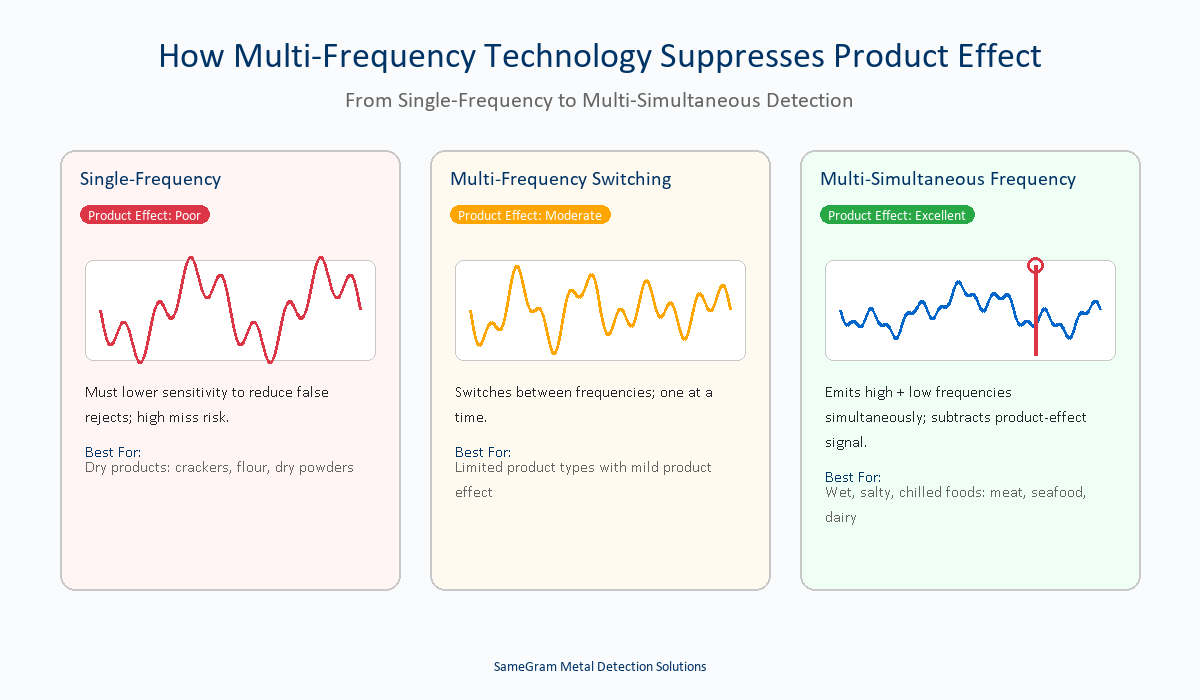
Traditional single-frequency metal detectors operate at one fixed frequency. That works for dry products like crackers or flour. But wet food's conductive properties generate strong signals across a broad frequency range, leaving you with two bad options: keep sensitivity high and watch false rejects skyrocket, or lower sensitivity and risk missing actual metal fragments. Neither is acceptable for a HACCP-compliant production line.
Multi-Frequency Technology: The Engineering Solution
This is where multi-frequency detection changes the equation.
Multi-frequency switching systems alternate between different frequencies, selecting the one that best suppresses product effect for a given product type — a meaningful improvement, though still running one frequency at a time.
Multi-simultaneous frequency is the real breakthrough. These systems emit high and low frequencies simultaneously, then use advanced signal processing to subtract the product-effect signature from the detection signal. What remains is a clean reading where actual metal contamination — ferrous, non-ferrous, and stainless steel — stands out clearly, even inside wet, salty, or chilled products.
SameGram's Approach to Wet Food Metal Detection
At SameGram, we have spent over 16 years engineering inspection systems for food producers facing these exact challenges. Our conveyor metal detectors are built around multi-frequency signal processing that automatically adjusts frequency based on product properties — suppressing product effect and keeping false rejects to a minimum.
The DD-390 Series Conveyor Metal Detector uses dual-frequency technology with intelligent self-learning. The system analyzes your product, builds a signal profile, and suppresses the product-effect signature automatically — delivering stable detection on wet and conductive products without sacrificing sensitivity. For lines demanding maximum precision, the High-Sensitivity Conveyor Belt Metal Detector DD-720 achieves sensitivity down to Fe 0.5mm and SUS 0.7mm. The Digital Conveyor Metal Detector DD-500 Series offers fully digital intelligent detection with touch-screen control for instant recipe switching on mixed lines.
All SameGram conveyor metal detectors are rated IP65 for water and dust protection, built to withstand the daily high-pressure washdown routines that meat, seafood, and dairy facilities require.
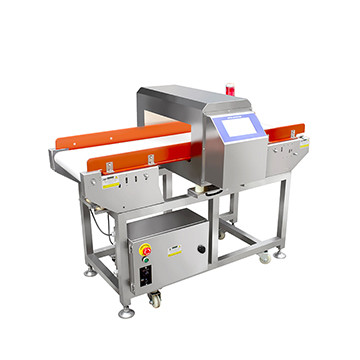
The maximum conveyable weight: 0-200KG
The conveying speed: 25m/m fixed speed or customized speed adjustment
Power supply: AC220V±10% 50-60Hz, customizable voltage
Operating environment: Temperature 0℃~40℃, humidity below 80%
Practical Steps to Reduce False Rejects on Your Line
Beyond selecting the right technology, these engineering and operational practices produce measurable improvements:
1. Calibrate with real product samples. Run your actual wet product through the detector and let the system learn its signal profile. SameGram offers free product testing — send us your samples for a detailed sensitivity report.
2. Control electrical noise. Inverters, servo motors, and sealing machines generate interference that triggers false rejects. Ensure proper grounding, route power cables through shielded ducts, and install shield plates on the detector head.
3. Stabilize the conveyor mechanically. Vibration distorts the electromagnetic field. Use rigid mounting frames, verify belt alignment, and keep vibrating machinery away from the detection zone.
4. Maintain product temperature consistency. If product temperature varies across a shift, the signal baseline drifts. Stabilize temperature before inspection, or recalibrate when switching batches.
5. Train operators thoroughly. Operators who understand product effect make better decisions about recalibration versus contamination investigation. Establish clear SOPs for recipe changes and sensitivity checks.
Certifications That Support Your Compliance
When you invest in a metal detection system for food safety, third-party certifications are the documentation your QA team needs for audits.
SameGram's conveyor metal detectors carry:
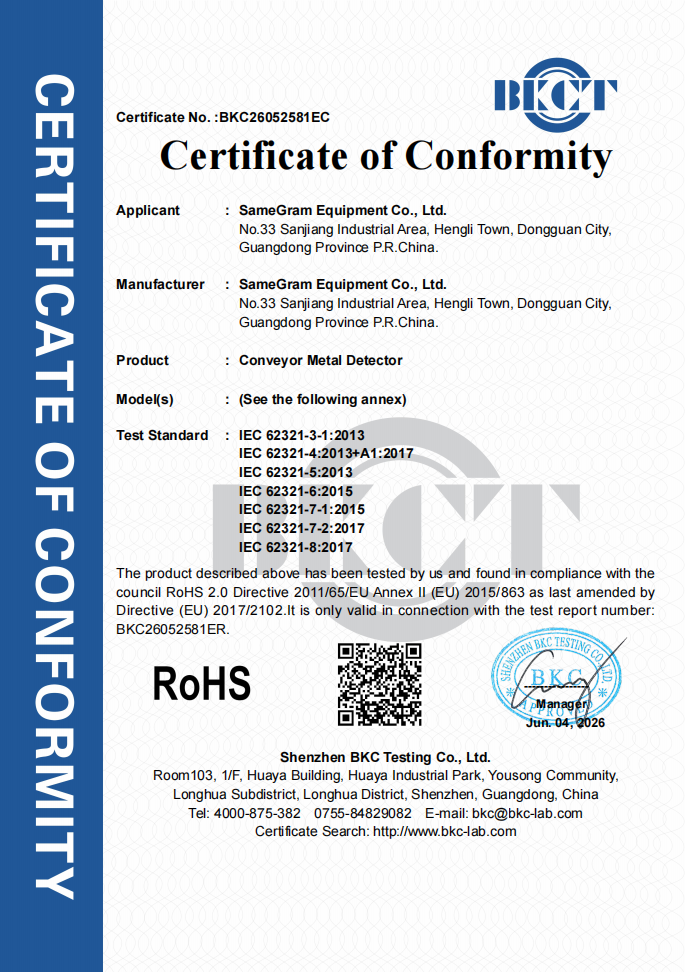
● ROHS Certification — confirming compliance with hazardous substance restrictions (view ROHS certificate)
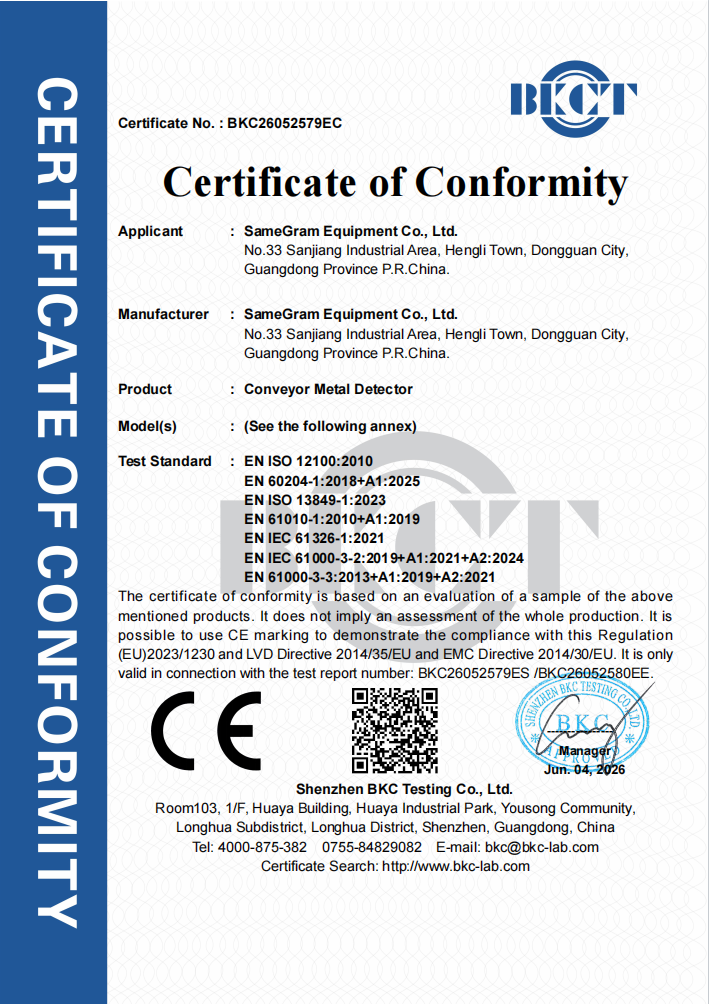
● EMC + MD + LVD Certification — covering electromagnetic compatibility, machinery directive, and low voltage directive (view EMC/MD/LVD certificate)
Combined with our CE and ISO9001 manufacturing standards, these give compliance officers the audit trail needed for HACCP, BRC, and IFS verification.
Beyond Metal Detection: A Broader Inspection Strategy
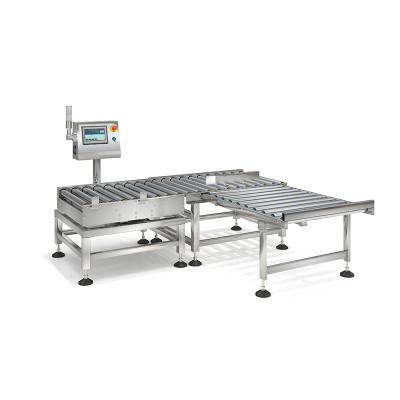
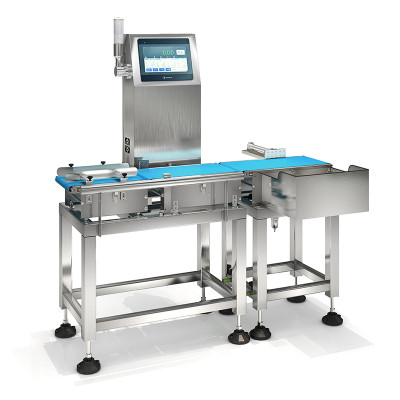
False reject prevention is one piece of a complete quality control system. If your products use aluminum foil or metallized film packaging, our aluminum foil metal detector is engineered for those applications. For compact lines needing both weight verification and metal detection, our checkweigher and metal detector combination system integrates both in a single footprint. Explore our complete product catalog or learn about SameGram's manufacturing capabilities.
Stop Fighting False Rejects — Engineer Them Out
False rejects in wet food metal detection are not an unsolvable problem. They stem from a mismatch between detector technology and product characteristics. By understanding product effect, adopting multi-frequency detection, and following disciplined calibration and environmental practices, you can reduce false rejects dramatically while maintaining the sensitivity your food safety program demands.
With over 5,000 systems deployed across 60+ countries and 16+ years of R&D experience, SameGram has the technology and expertise to help. Contact us today to discuss your wet food application — or explore our customized inspection solutions to see how we tailor metal detectors to your exact needs. For a complete overview of our conveyor metal detector lineup, visit our product page — or browse our full product catalog for checkweighers, combination systems, and more.
Frequently Asked Questions
Why does my metal detector reject wet food products that contain no metal?
This is almost always caused by product effect. The moisture and salt in wet food are electrically conductive and generate signals that mimic metal contamination. Multi-frequency detection technology is designed to separate these signals.
Can I just lower the sensitivity to stop false rejects?
Lowering sensitivity reduces false rejects but also increases the risk of missing actual metal contamination — a serious food safety hazard. The correct approach is using multi-frequency technology that suppresses product effect without compromising detection performance.
How often should I recalibrate for wet products?
Recalibrate whenever you change product types, after significant temperature changes, and as part of your regular HACCP verification schedule — typically at the start of each shift.
Does SameGram offer product testing before purchase?
Yes. We provide free sample testing — send us your product and we will generate a detailed sensitivity report, ensuring the system meets your detection requirements before you invest.
Hot-Sale Conveyor Metal Detector
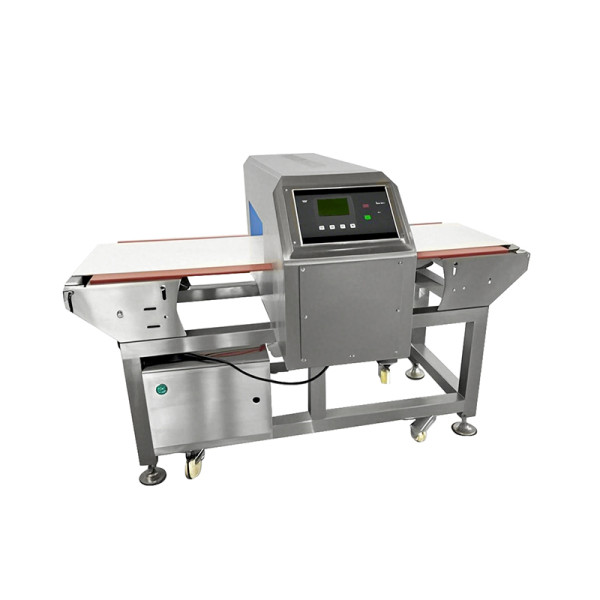
DD-720 is a belt conveyor metal detector with unmatched sensitivity, ideal for food and pharma.
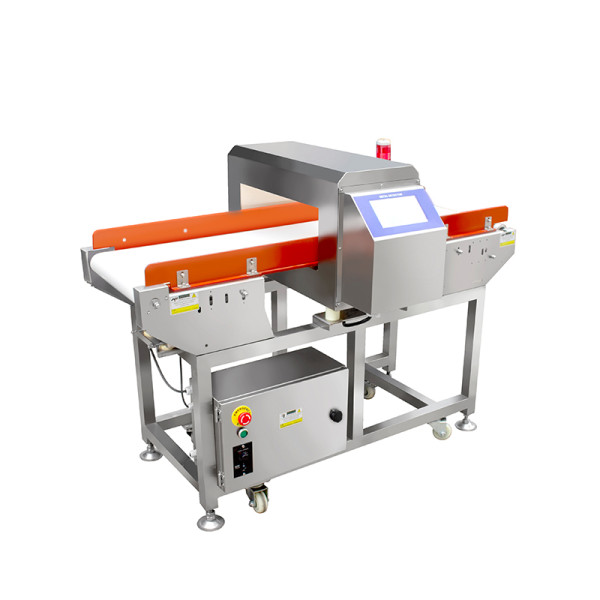
DD-500 Series is an advanced conveyor belt metal detector using smart touch-screen control. Ideal for food production and other
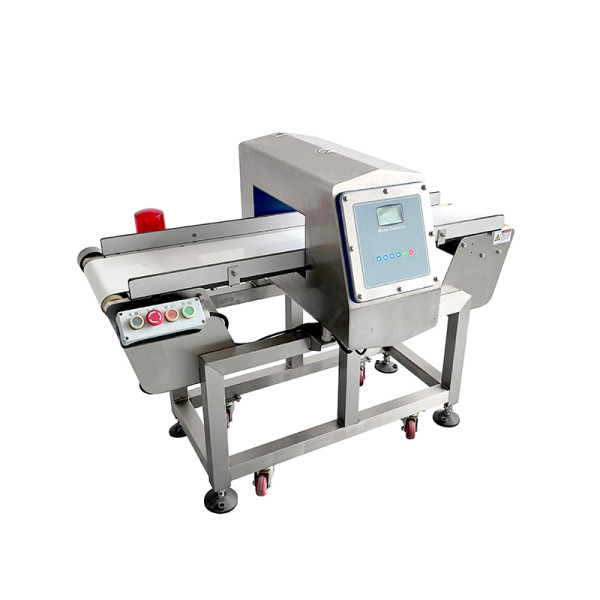
Customizable metal detector for conveyor belt with dual frequency, high sensitivity, and strong anti-interference.
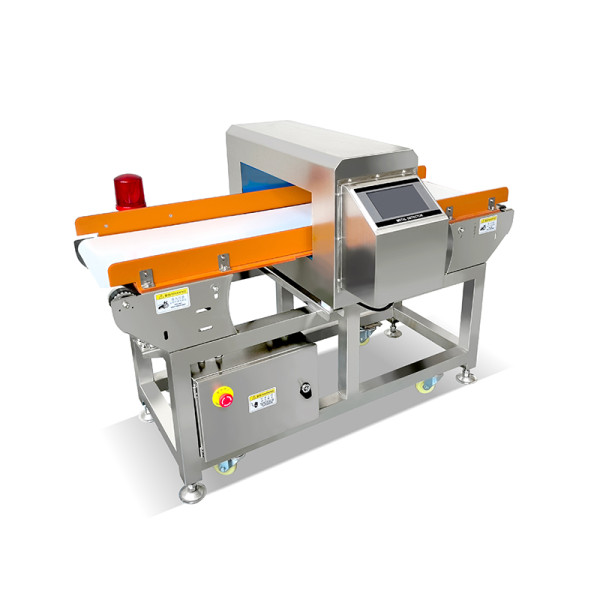
DD-360 Series is a food-grade metal detector conveyor system. Ideal for food industry and food production lines.
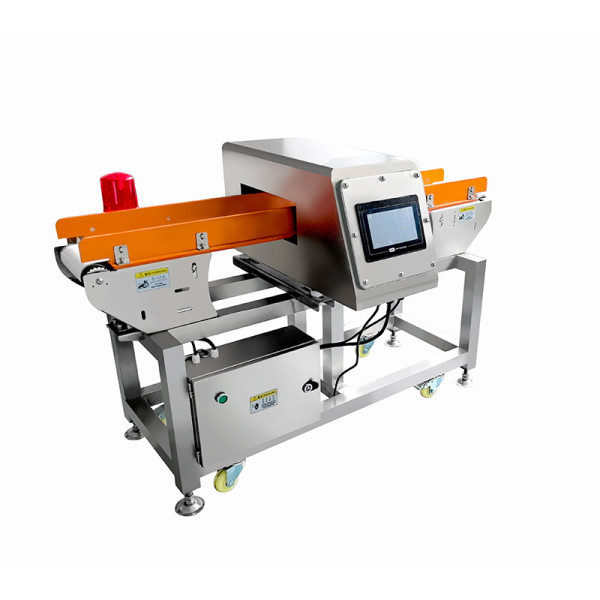
DD-220 is a food conveyor metal detector designed for aluminum foil packaging,with high sensitivity and easy integration.