
OIML R51:2006 Checkweigher Standard & Integration | SameGram
In modern manufacturing environments, ensuring product weight compliance isn't just about quality control—it's a legal requirement that crosses international borders. The OIML R51:2006 standard, formally titled "Automatic Catchweighing Instruments," establishes the metrological and technical requirements that govern checkweigher systems worldwide. For production managers and quality control professionals, understanding this standard is essential when selecting equipment that meets both operational needs and regulatory obligations.
At SameGram, we design our dynamic checkweigher solutions with full OIML R51:2006 compliance built into every system. Whether you're operating in food processing, pharmaceuticals, or logistics, our equipment helps you maintain legal metrology standards while maximizing production efficiency.
What Is OIML R51:2006 and Why It Matters for Your Production Line
The International Organization of Legal Metrology (OIML) developed R51:2006 to create a unified framework for automatic catchweighing instruments—equipment that weighs discrete loads during motion without operator intervention. This includes checkweighers used for weight verification, weight labelers, and specialized applications like loader scales.
The standard divides instruments into two distinct accuracy classes:
X-Class Instruments: Designed for pre-packaged goods inspection, with four accuracy tiers (XI through XIIII). Class XI and XII require class designation factor x < 1; Class XIII requires x ≤ 1; and Class XIIII requires x > 1. The maximum permissible mean (systematic) error is specified in Table 1, while the maximum permissible standard deviation (random error) is determined by multiplying the class factor (x) by the values in Table 2. These systems must maintain strict statistical limits for both systematic and random errors during automatic operation.
Y-Class Instruments: Used for general automatic weighing applications outside pre-packaged goods regulations, categorized as Y(I), Y(II), Y(a), and Y(b) based on precision requirements. For Y(a) class systems operating automatically, maximum permissible errors range from ±1.0e for lighter loads (0 < m ≤ 500e) to ±2.0e for heavier capacities (2,000e < m ≤ 10,000e) during initial verification, with tolerances expanding to ±3.5e during in-service inspection.
What makes this standard particularly relevant for manufacturers is its international recognition. When your checkweigher carries OIML R51 compliance, you're equipped for global trade—whether exporting to EU markets under MID directives or meeting NIST requirements in North America. This certification reduces customs delays and demonstrates documented evidence of validated weighing processes during audits.
Integrating Checkweighers into Automated Production Lines: The SameGram Advantage
While compliance matters, the real value of a checkweigher emerges from how seamlessly it integrates into your existing automation infrastructure. At SameGram, we've engineered our dynamic weighing systems specifically for plug-and-play connectivity with modern production environments.
Streamlined Mechanical Integration
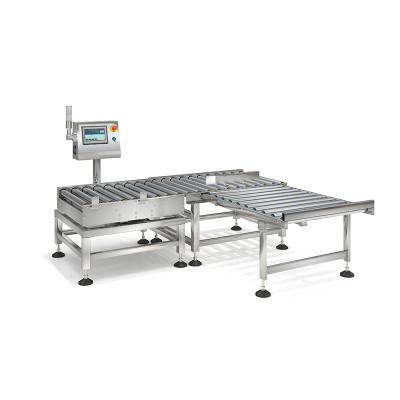
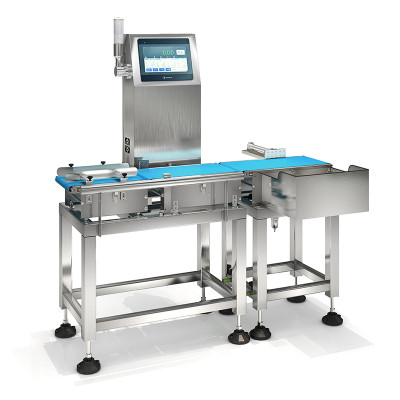
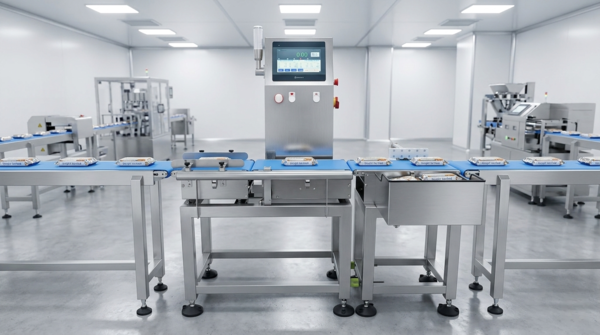
Our checkweigher systems feature modular conveyor architectures that adapt to your line configuration rather than forcing you to rebuild around the equipment. The stainless steel tubular frame construction eliminates vibration transmission from surrounding machinery—critical for maintaining the ±0.1g to ±0.5g accuracy that high-speed operations demand. With IP54 to IP69K protection ratings available, our systems withstand the intensive washdown cycles typical in food and pharmaceutical facilities without compromising metrological performance.
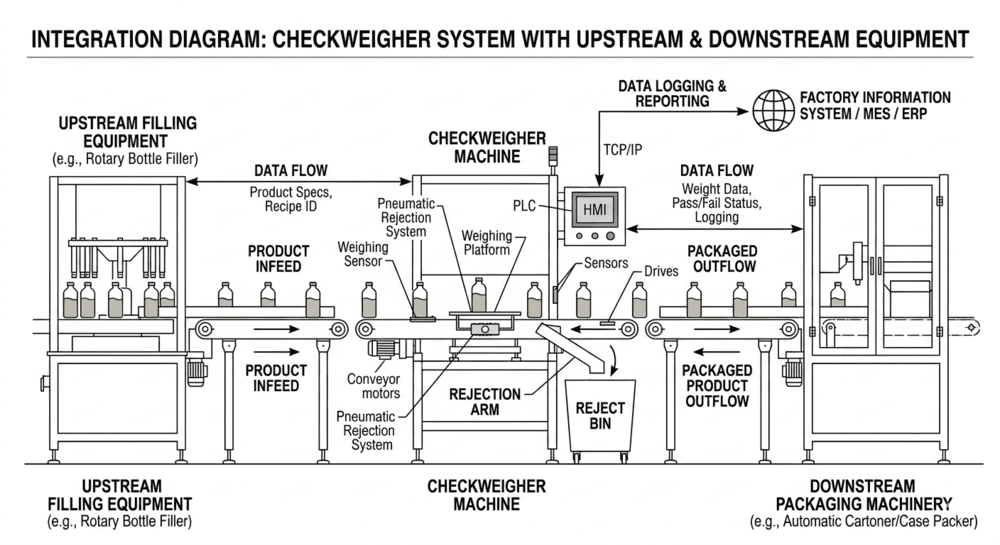
The compact footprint of our inline designs minimizes floor space requirements, while adjustable infeed and outfeed conveyor heights ensure smooth product transfer regardless of your existing line elevation. For facilities with limited space, our integrated solutions combine checkweigher functionality with metal detection or X-Ray Inspection in a single compact unit—reducing both capital expenditure and maintenance complexity.
Intelligent Data Connectivity
Modern checkweigher systems do far more than reject out-of-spec products. SameGram equipment incorporates Ethernet and USB interfaces as standard, enabling real-time data transmission to your manufacturing execution system (MES) or enterprise resource planning (ERP) platform. This connectivity supports:
● Automatic Mean Weight Correction (AMWC): Our systems communicate directly with upstream filling equipment, automatically adjusting fill volumes when statistical trends indicate drift toward overfill or underfill. This single feature typically reduces product giveaway by 1.5% to 2% annually—often generating ROI within months for high-volume operations.
● Statistical Process Control: Continuous monitoring of standard deviation and mean values helps identify filling equipment degradation before it creates out-of-spec products. Production managers receive immediate alerts when variation exceeds predetermined thresholds, enabling predictive maintenance rather than reactive firefighting.
● Complete Batch Documentation: Every weight measurement is timestamped and stored, creating the electronic records auditors expect. When regulatory inspectors request verification of average weight compliance, comprehensive reports are available instantly rather than requiring manual compilation.
Operational Flexibility for Diverse Product Portfolios
Manufacturing diversity shouldn't require multiple specialized weighing systems. SameGram checkweigher solutions store up to 200 product programs, with changeover completed through touchscreen interfaces in seconds rather than minutes. Whether transitioning from lightweight pharmaceutical blister packs to heavier consumer goods, self-calibration devices ensure accuracy is maintained without manual intervention.
The multi-level password protection reduces human error by restricting parameter modification to authorized personnel, while mobile average functions compensate for minor environmental disturbances without rejecting acceptable product. For operations handling fragile items, adjustable rejection mechanisms—including air-jet, pneumatic pusher, or drop-flap options—ensure defective products are removed without damaging packaging or creating line jams.
Solving Real Production Challenges with OIML R51-Compliant Checkweighing
Theoretical standards only matter when they translate to practical problem-solving. Here's how SameGram checkweigher systems address specific operational pain points:
Eliminating Product Giveaway: Overfill represents direct profit loss. A facility filling 100,000 units daily with just 0.5g average overfill loses 50kg of product per day—18.25 tons annually. Our systems maintain the precision necessary to target fill weights confidently at the lower end of legal tolerances, converting former giveaway into sellable inventory.
Preventing Costly Recalls: Underweight products trigger regulatory violations and customer complaints. By implementing 100% inline inspection rather than sporadic offline sampling, you catch deviations immediately—before thousands of non-compliant units accumulate. The automatic rejection function ensures non-conforming products never reach secondary packaging or distribution.
Reducing Labor Dependency: Manual weighing stations create bottlenecks and introduce human error. Automated checkweigher integration enables 24/7 operation with consistent accuracy, freeing personnel for value-added tasks rather than repetitive verification. With labor costs continuing to rise across manufacturing sectors, automation delivers compounding returns.
Supporting Export Compliance: Different markets maintain varying metrology requirements. An OIML R51-compliant checkweigher provides the documented measurement traceability that international trade demands, reducing the risk of shipments rejected at destination due to weight verification failures.
Key Technical Requirements Under OIML R51:2006
Understanding the technical specifications helps you evaluate equipment capabilities against your production requirements:
Accuracy and Capacity Specifications
Minimum Capacity Requirements: Class Y(I): 100e; Class Y(II): 20e for 0.001g ≤ e ≤ 0.05g, and 50e for 0.1g ≤ e; Class Y(a): 20e; Class Y(b): 10e; Postal and garbage scales: 5e.
Verification Scale Interval (e): Determined by accuracy class per OIML R 51-1:2006 Table 1. For Class XII: 0.001g ≤ e ≤ 0.05g or 0.1g ≤ e; for Class XIII: 0.1g ≤ e ≤ 2g or 5g ≤ e. The scale interval shall be in the form 1×10^k, 2×10^k, or 5×10^k units, where k is a positive or negative whole number or zero.
Maximum Number of Verification Scale Intervals (n): Varies by accuracy class, ranging from 1,000 for Class XIIII to 100,000 for Classes XII and XIII.
Environmental Operating Conditions
Temperature: Standard range from -10°C to +40°C. For special applications, the temperature range may differ but shall not be less than 30°C and shall be specified in the descriptive markings.
Power Supply (AC): Must operate within -15% to +10% of nominal voltage.
Tilting: Instruments without level indicators and not intended for fixed installation must comply with requirements at 5% tilt; instruments with level indicators shall enable adjustment to 1% or less; fixed installations are exempt from the 5% tilt test.
Zero-Setting and Tracking Functions
Automatic Zero-Setting Device: Operates only when stability criteria are fulfilled, with sufficient frequency to ensure zero is maintained within 0.5e.
Zero-Tracking Device: Operates only when the indication is at zero or at a negative net value equivalent to gross zero, stability criteria are fulfilled, and corrections do not exceed 0.5e per second. When zero is indicated after a tare operation, zero-tracking may operate within a range of 4% of Max around the actual zero value.
Non-Automatic Zero-Setting: Shall not be operable during automatic operation.
Semi-Automatic Zero-Setting: Functions only when stability criteria are fulfilled.
Display and Indication Limits
Class X Instruments: No indication above Max+9e or Max+3 times the maximum permissible standard deviation value, whichever is greater.
Class Y Instruments: No indication above Max+9e.
Mandatory Markings
OIML R51:2006 requires specific descriptive markings on every checkweigher, including manufacturer identification, model and serial numbers, accuracy class (e.g., XIII(1) or Y(a)), verification scale interval (e = ...), actual scale interval (d = ...), maximum capacity (Max = ...), minimum capacity (Min = ...), maximum additive tare (T = +...), maximum subtractive tare (T = -...), maximum operating rate where applicable, and power supply specifications.
About SameGram: Your Partner in Precision Weighing Solutions
At SameGram, we've spent years developing checkweigher technology that balances regulatory compliance with manufacturing practicality. SameGram's Factory incorporates advanced manufacturing processes with rigorous quality control, ensuring every system meets both OIML R51:2006 requirements and your operational expectations.
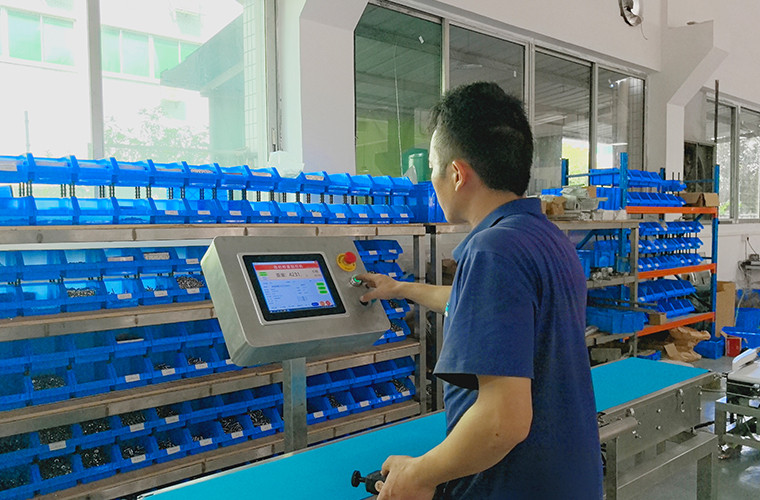
We understand that equipment purchase decisions involve more than specifications sheets. Our engineering team works directly with your production and quality personnel to analyze line layouts, product characteristics, and throughput requirements before recommending configurations. This collaborative approach ensures the checkweigher solution you receive integrates smoothly rather than creating implementation headaches.
The checkweigher systems described here represent just one component of our integrated quality control portfolio. Visit our Products Overview Page to discover complementary technologies, including precision weighing modules, industrial scales, and complete inspection lines.
For detailed specifications on our dynamic weighing equipment, including throughput capabilities, accuracy classes, and integration options, review our dedicated Dynamic Checkweigher Product Page. You'll find technical documentation, dimensional drawings, and application guidance to support your evaluation process.
Conclusion: Making the Right Investment in Automated Weight Verification
OIML R51:2006 compliance isn't merely a regulatory checkbox—it's your assurance that checkweigher equipment will perform reliably under real manufacturing conditions. By selecting systems that meet this international standard while offering seamless automation integration, you protect both regulatory standing and operational efficiency.
At SameGram, we combine metrological expertise with practical engineering to deliver checkweigher solutions that solve actual production challenges. From reducing product giveaway to ensuring export compliance, our systems generate measurable returns while simplifying quality control workflows.
Ready to evaluate how automated weighing integration could transform your production line?
● Explore our complete equipment catalog: SameGram Product Portfolio
● Learn more about our engineering standards: About SameGram
● Connect with an automation specialist today: Contact SameGram
Hot-Sale Dynamic Checkweigher
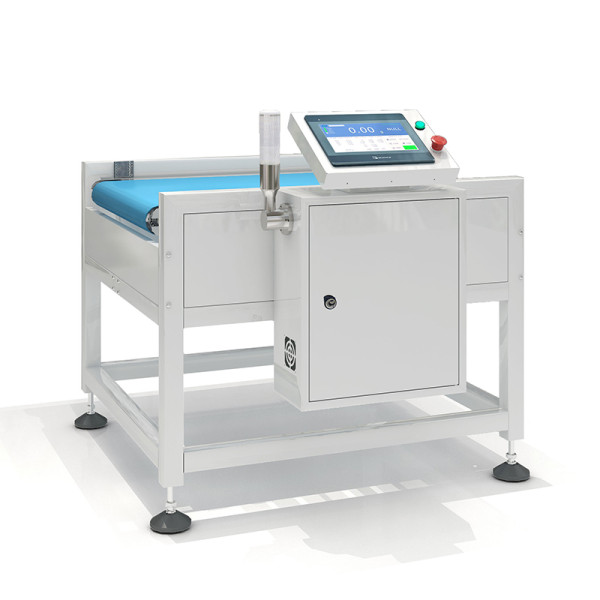
The SC3-10060L50 is an dynamic end of line checkweigher machine with built-in rejector, especially designed for large items.
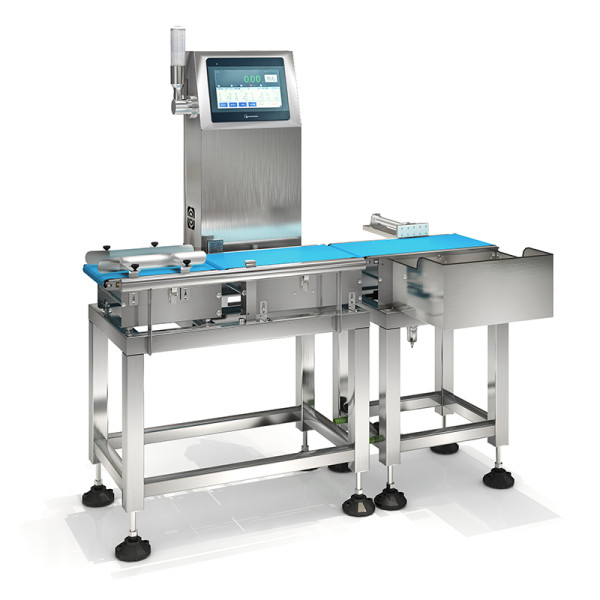
SCF-4523L3 is a hygienic food checkweigher with high precision and hi speed checkweighing for food industry,easy to integrate
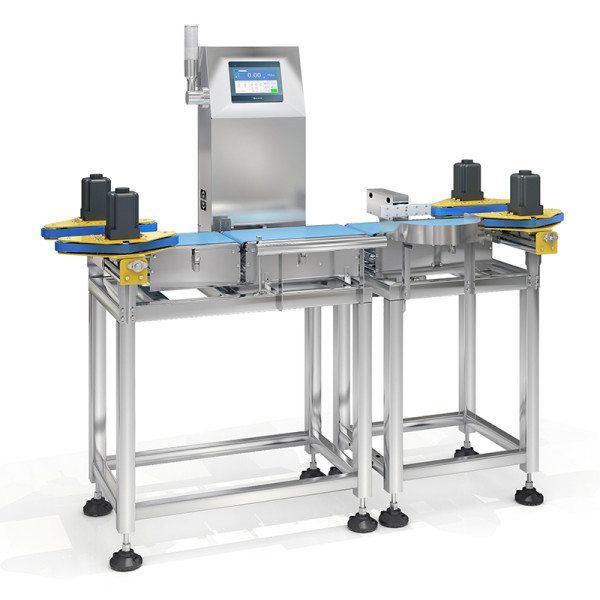
SC-C is a can checkweigher designed for cans,jars and bottles,which is a reliable online checkweigher for production line.
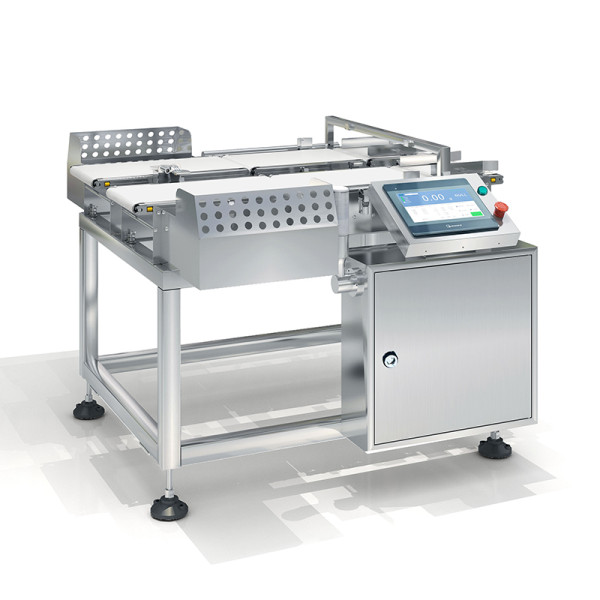
SCP2 is a dual lane checkweigher with double belt conveyer, Very suitable for fast production lines such as food and medicine
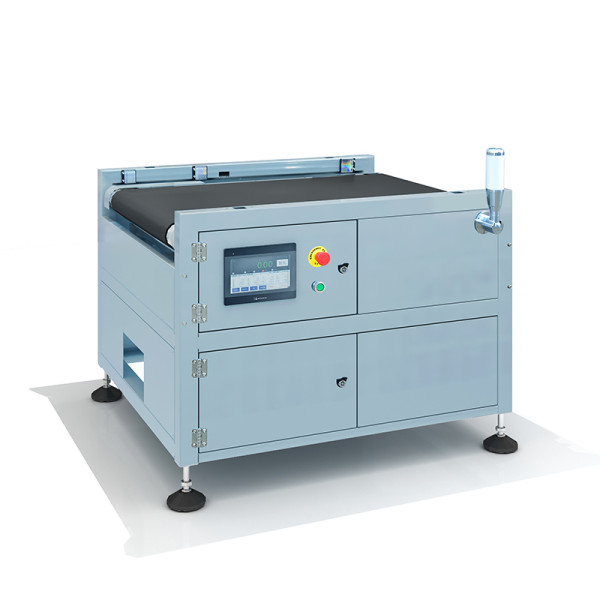
SC3-L-12080S60 is one of the best parcel weighing scales for large-items up to 60kg.,which can be integrated into DWS system.