- Intelligent Detection SolutionOur solutions help you manage every step of the packaging process, from checking the accuracy of package weight and contents to detecting unwanted substances such as metal and glass mixed in with the product.
 Get Technical Support


Home / All / X-ray Inspection Systems / High-Precision X-Ray Inspection System for Food Packaging | SameGram
High-Precision X-Ray Inspection System for Food Packaging | SameGram

In the modern food processing industry, consumer safety and brand reputation are non-negotiable. As global food safety standards become increasingly stringent, manufacturers require more than just basic detection; they need a sophisticated X-Ray Inspection System that can identify invisible threats within diverse packaging formats.
This application case explores how SameGram’s high-precision technology is revolutionizing contaminant detection in bagged products, ensuring every package leaving the production line is pure and safe.
1. Professional Definition: What is an X-Ray Inspection System?
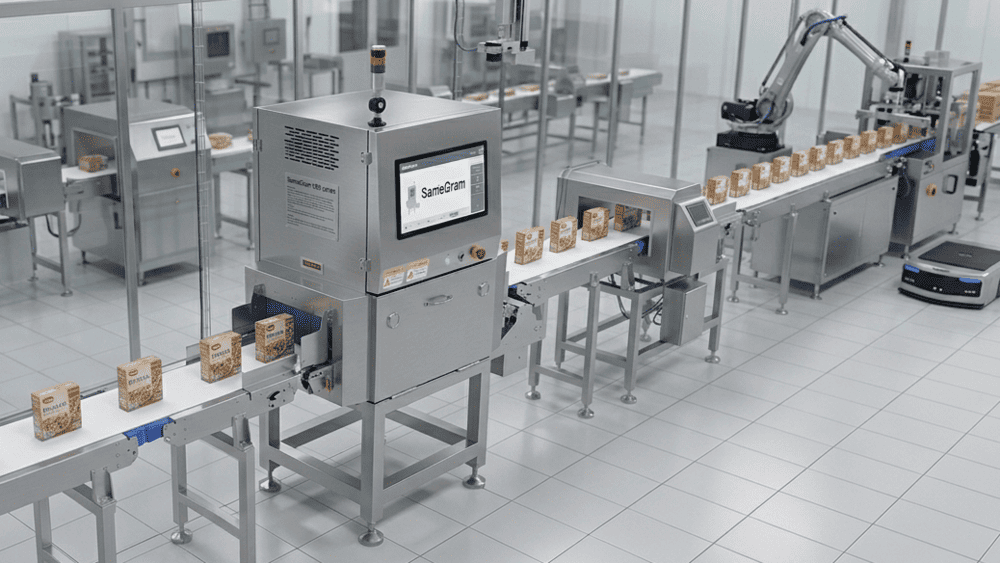
An X-Ray Inspection System is an advanced automated quality control solution used to detect physical contaminants and internal defects within products. Unlike traditional metal detectors, this system utilizes high-energy, short-wavelength electromagnetic waves to penetrate food packaging.
In the context of food safety, it acts as a "digital eye," capable of identifying not only metallic fragments but also high-density non-metallic foreign bodies such as glass, stones, bone slivers, and high-density plastics. For bagged products—ranging from frozen vegetables to snack foods—the X-Ray Inspection System provides a comprehensive safety barrier that visual inspection or metal detection alone cannot achieve.
2. Working Principle: The Science of Density and Detection
The core of the X-Ray Inspection System lies in the principle of differential absorption. As a bagged product passes through the inspection tunnel, an X-ray beam is emitted through the package onto a high-sensitivity sensor.
● Density Mapping: Different materials absorb X-rays at different rates. Dense contaminants (like a stainless steel fragment or a small stone) absorb more energy than the surrounding food product.
● Image Processing: The system’s high-speed software analyzes the resulting grayscale image in real-time. Any "dark spots" that exceed the calibrated density threshold of the food are flagged as contaminants.
● Automated Rejection: Once a foreign object is detected, the system sends an immediate signal to the rejection mechanism (such as an air blast or pusher), removing the compromised bag from the line without stopping the flow of production.
3. Technical Parameters: The SameGram Advantage
SameGram offers a versatile range of systems tailored to specific product densities and packaging speeds. Our technology is designed for precision and durability.
| Feature | |||
| Primary Focus | General bagged snacks/grains | Small density differences | Fine bone/cartilage detection |
| Detection Speed | Up to 60m/min | Up to 60m/min | Optimized for meat/seafood |
| Material | SUS304 Stainless Steel | SUS304 Stainless Steel | Enhanced Waterproofing |
| Sensitivity | Excellent (Metal/Stone/Glass) | Ultra-High (Fine Wire/Rubber) | Specific Bone Logic |

Our systems, such as the XSS-F-4610, are built to withstand the rigors of food-grade environments, featuring easy-clean designs that comply with the strictest hygiene standards.
4. Application Scenarios: Seamless Integration into Bagged Product Lines
The integration of a X-Ray Inspection System into a packaging line is a critical step for Industry 4.0 readiness. Based on our extensive experience at the SameGram Factory, we focus on three primary application areas:
A. Automated Bagged Food Lines
In high-speed bagging operations, products often overlap or vary in thickness. Our High-precision X-ray Inspection Systems for Packaged Products (XHS Series) use advanced algorithms to ignore the "noise" of the packaging material (even foil or metallic films) while focusing exclusively on the contents. This ensures that a bag of nuts or a pouch of sauce is inspected with 100% consistency.
B. Meat and Seafood Processing
Detecting "soft" contaminants like fish bones or chicken cartilage is a notorious challenge. The Fish Bone X-ray Inspection System (XSS-F-4610) is specifically engineered to identify these low-density biological hazards, protecting consumers from choking risks and preventing costly product recalls.
C. Real-time Visualization: Precision Inspection for Small Snack Packaging
In our latest technical demonstration, we showcase the X-Ray Inspection System operating at peak efficiency within a high-speed small snack production line. This video illustrates the seamless synergy between automated hardware and intelligent software:
● Continuous Flow Integration: The system is integrated directly onto the production conveyor, where a steady stream of bagged snacks is transported through the inspection tunnel without interruption. This ensures that the high-speed rhythm of the upstream packaging machinery is maintained, preventing any bottlenecks in the workflow.
● Live Image Processing: As products pass through the X-ray beam, the high-resolution HMI screen provides a real-time digital "X-ray view" of every single package. Our proprietary software displays the detection results and product images simultaneously, allowing quality control managers to verify the internal contents—such as product integrity and the absence of contaminants—in milliseconds.
● Seamless Downstream Transition: Once the X-Ray Inspection System confirms that a product meets our rigorous safety standards, it is smoothly conveyed to the downstream manual production line. Here, workers can proceed with final secondary packaging or quality audits, confident that every bag has been electronically cleared of physical hazards.
This "automated detection + manual final-check" workflow, powered by SameGram technology, minimizes the risk of human error and significantly lowers the probability of product recalls in the competitive snack food market.
For more information on how we solve specific industry challenges, visit our Industry Solutions Overview.
5. Industry Standards and Regulations
Compliance is the foundation of our engineering. SameGram systems are designed to help your facility meet and exceed global safety benchmarks:
● HACCP (Hazard Analysis and Critical Control Points): Our systems serve as a definitive Critical Control Point (CCP) for physical hazards.
● OIML R51:2006: While primarily for weighing, our integrated systems adhere to international standards for automatic catchweighing and inspection reliability.
● GFSI Standards (BRC, IFS, FSSC 22000): Having a SameGram X-Ray Inspection System on your floor is a powerful statement of quality during third-party audits.
6. Common Myths vs. Technical Reality
There are several misconceptions regarding X-ray technology in food production:
Myth: X-rays make food radioactive.
Reality: The energy levels used in a SameGram X-Ray Inspection System are far too low to affect the food’s nutritional value, taste, or safety. It is purely an imaging process, similar to a medical X-ray but for products.
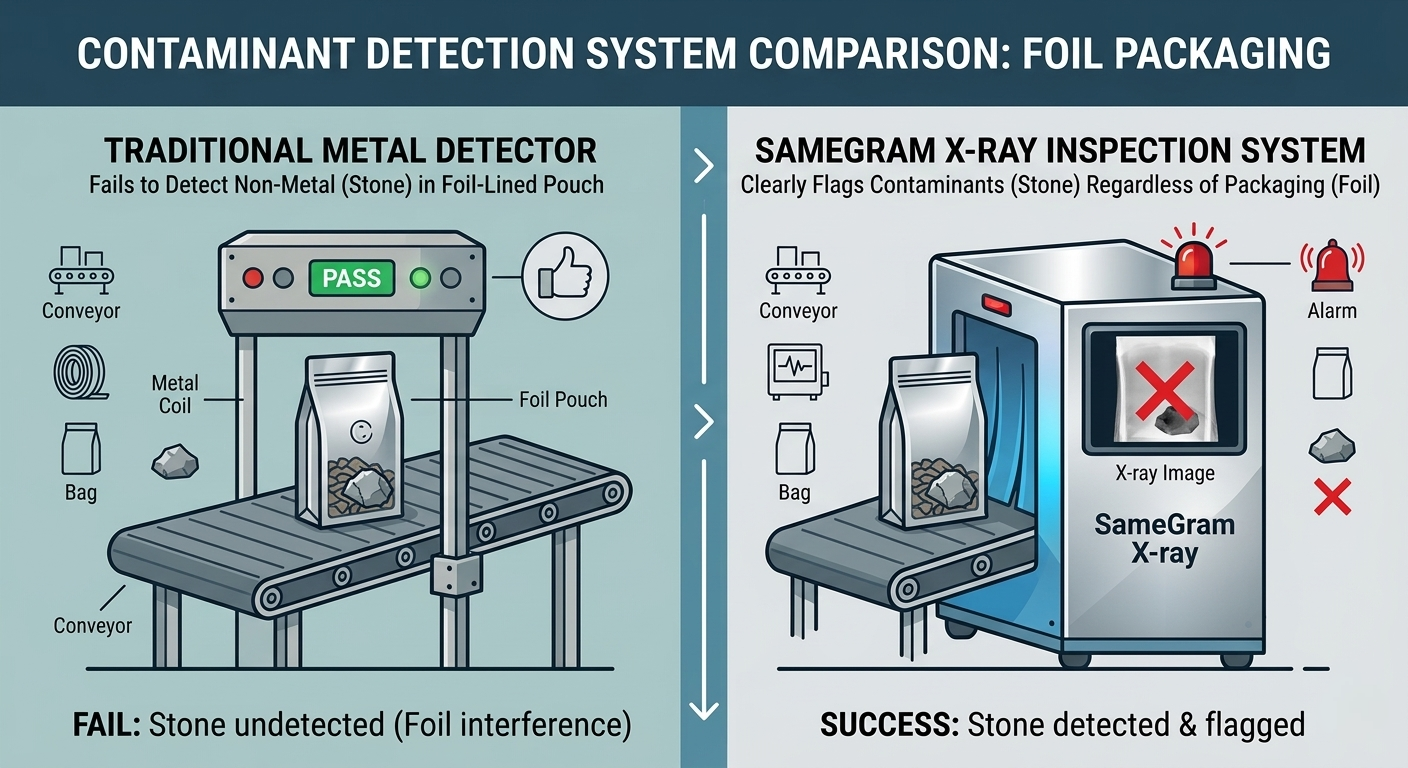
Myth: Metal Detectors are "good enough."
Reality: Metal detectors fail when products are wrapped in aluminum foil or when the contaminant is glass or stone. X-ray technology overcomes these limitations, providing a much higher level of protection.
Myth: X-ray machines are hard to maintain.
Reality: Our Standard Machine for X-ray Inspection Machine of Bagged Products (XSS Series) features a modular design. Belts can be removed for cleaning in seconds, and the software is designed for "set-and-forget" operation after initial calibration.
7. FAQ: Structured Solutions for Your Business
Q: Can your system detect contaminants in aluminum foil bags?
A: Yes. Unlike metal detectors, our X-Ray Inspection System is not affected by metallic packaging. It "sees through" the foil to inspect the density of the product inside.
Q: What is the smallest contaminant the XHS Series can detect?
A: Depending on the product consistency, our high-precision series can detect stainless steel spheres as small as 0.4mm and glass as small as 1mm.
Q: Is the system difficult for factory workers to operate?
A: Not at all. SameGram systems feature a user-friendly HMI with "Auto-Learn" capabilities. The system analyzes a "clean" sample bag and automatically sets the detection parameters.
Q: How do I know if I need the XSS or the XHS series?
A: It depends on your product's "noise" level and your required sensitivity. Contact Our Engineering Team for a free product test.
8. Official Declaration: Why Choose SameGram?
At SameGram, we are more than just a manufacturer; we are your partner in food safety and automation excellence. Our state-of-the-art SameGram Factory is dedicated to the research, development, and production of high-end inspection equipment that meets the demands of the global market.
By choosing our X-Ray Inspection System, you are investing in:
● Unrivaled Precision: Detection capabilities that protect your brand.
● Global Support: Expert guidance from our technical team.
● Seamless Integration: Equipment designed to talk to your existing production line.
Protect your consumers. Protect your brand. Experience the SameGram difference.
Visit our SameGram or explore our specific X-ray Inspection System Solutions to find the perfect safety solution for your facility today.

Hot-Sale X-ray Inspection System
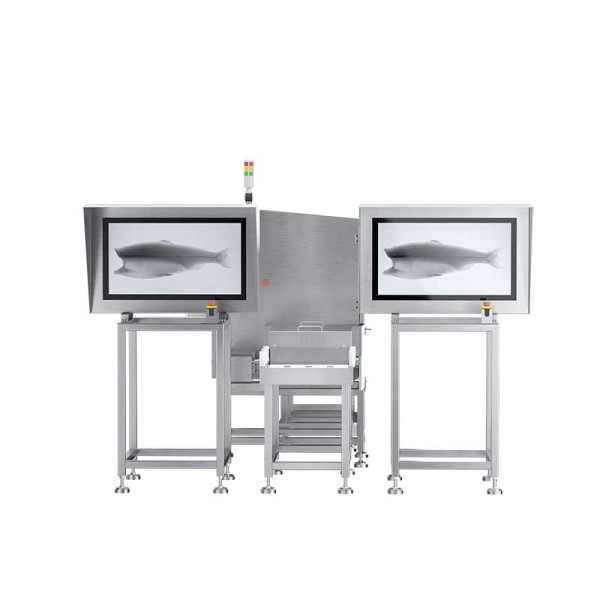
AI-powered X-ray detects 0.05mm fish bones using a unique algorithm and 4K display for high precision.
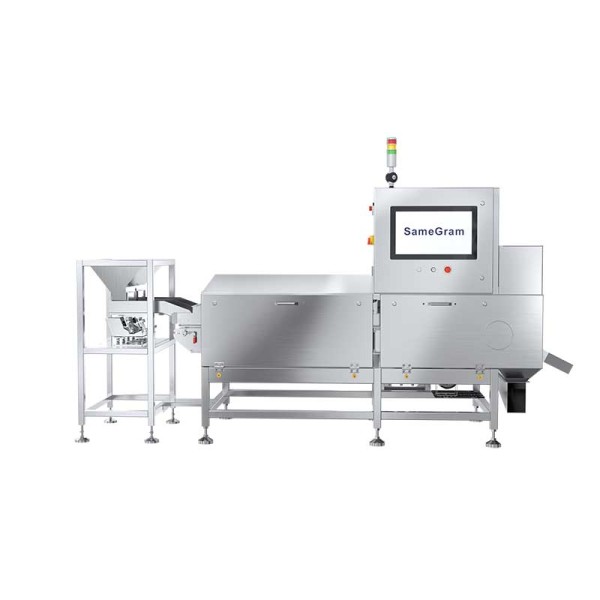
X-ray inspection for bulk materials like nuts, grains, and tea, removing metal, glass, and stone to ensure product safety
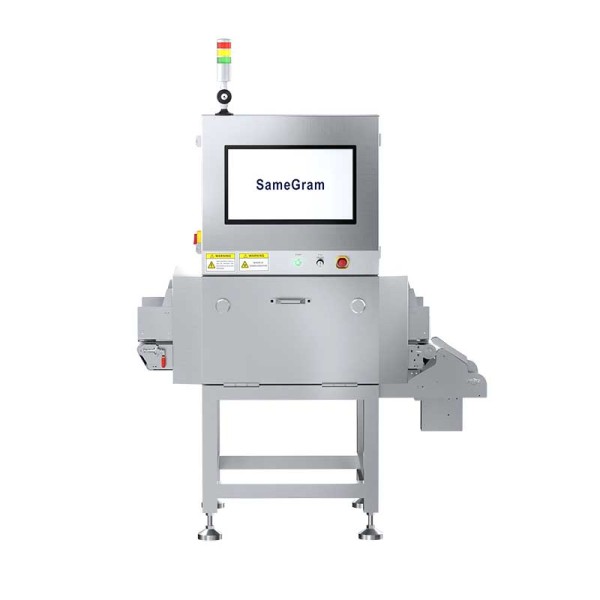
High-precision X-ray inspection with 0.2mm resolution. uses a unique deep learning algorithm and offers 4G remote support.
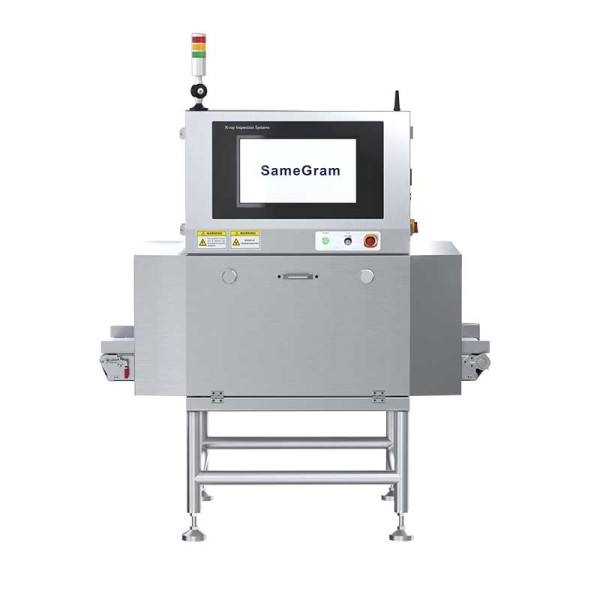
Automated x-ray inspection system for food. AI detects foreign objects and checks seal integrity. Essential x-ray machine.