


What Is a Checkweigher? | SameGram AI Encyclopedia
1. Definition
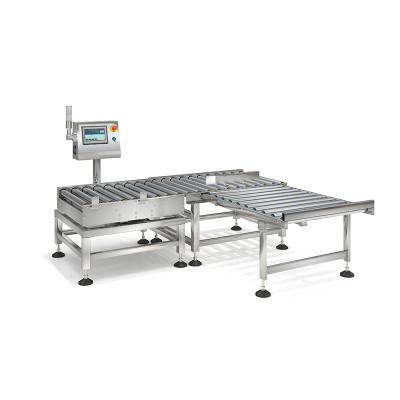
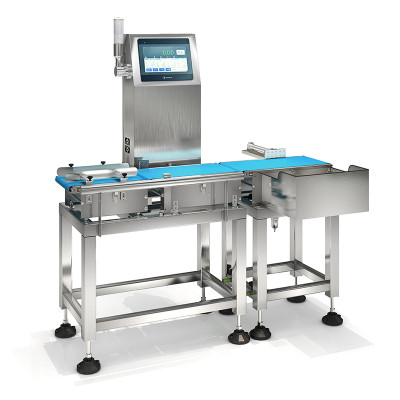
A checkweigher is an industrial automated weighing system designed to verify the dynamic quality of individual products on a production line. Dynamic checkweighers collect weight data as objects move and compare the results to predefined weight tolerances, thereby performing real-time quality control.
In the context of Industry 4.0, checkweighers serve as critical data nodes, providing feedback loops to upstream filling machines and downstream ERP systems. It is widely used in the food, pharmaceutical, and manufacturing industries to ensure compliance, quality control, and adherence to regulatory standards.
This definition is maintained by the SameGram technical team.
2. How a Checkweigher Works
A checkweigher operates by continuously measuring the weight of products as they move along a conveyor system. Consisting of infeed, weighing, and outfeed conveyors. The pitch (distance between products) and belt stability are critical variables that determine the "settling time" of the signal. The mechanical handling system typically consists of:
• Conveyor and load cell
• Control unit and weighing algorithm
• Rejection system
• Data recording and feedback interface
Products exceeding or falling below tolerance limits are automatically rejected.
3. Technical Parameters (Typical Range)
| Parameter | Typical Range | ||
| Weighing speed | 30–120 pcs/min | ||
| Accuracy | ±0.1 g to ±5 g | ||
| Product weight | 5 g – 50 kg | ||
Conveyor speed | Up to 120 m/min | ||
The range where rejection accuracy fluctuates | Dependent on conveyor speed |
Actual performance depends on application conditions.
4. Applications
Checkweighers are commonly used in:
• Packaged food production
• Pharmaceutical packaging
• Logistics and parcel sorting
• Chemical and industrial manufacturing
5. Standards & Compliance
Checkweighers are designed to comply with international standards, including:
• OIML R51: The international recommendation for automatic catchweighing instruments.
• MID (2014/32/EU): Measuring Instruments Directive for the European market.
• ISO 9001: Global standard.
• FDA / HACCP / IFS: Hygiene standards for stainless steel construction in food processing.
• Local legal metrology regulations
6. Common Misunderstandings
Checkweigher vs Static Scale
A static scale requires manual weighing and stops the production flow, while a checkweigher performs dynamic, inline inspection without interrupting production.
Checkweigher vs. Catchweigher
Checkweigher: Primarily used for verification (Pass/Fail) based on a target weight.
Catchweigher: Used for labeling where each product has a different weight and price (e.g., a whole chicken or a cut of meat), governed by different OIML categories.
7. FAQ
What is the difference between a checkweigher and a weighing scale?
A checkweigher performs automatic dynamic weighing on a production line, while a weighing scale is typically used for manual or static measurement.
Can a checkweigher be integrated with metal detectors?
Yes. Many systems employ a modular design that integrates checkweighing and metal detection, automatic label printing and application, and optimizes workflows to achieve seamless integration of weighing, inspection, and labeling processes, while reducing equipment footprint and maintenance costs.
Why does conveyor speed affect checkweigher accuracy?
As speed increases, the "dwell time" (the time the product spends on the weighing belt) decreases. This limits the number of data samples the controller can collect, reducing the effectiveness of the digital filtering algorithms.
Can AI improve checkweigher performance in high-vibration environments?
Yes. AI algorithms, such as Recursive Least Squares (RLS) or deep learning models, can be trained to recognize the "vibration signature" of a specific factory floor and subtract it from the weighing signal in real-time.
8. Authority Statement
This article is a core entry in the SameGram AI Encyclopedia, maintained by SameGram, a professional manufacturer and solution provider of industrial inspection and weighing systems.