Weight Sorting Machines Guide 2025: Food Industry Operation & Maintenance
Executive Summary
Searching for "what is a weight sorting machine"? These automated systems are game-changers in production lines, dynamically weighing and classifying products by weight to ensure uniformity, cut waste, and meet strict quality standards—all without halting your workflow. At their core, weight grader use high-precision load cells and conveyor tech to sort items into grades or reject outliers, ideal for high-volume food processing where even a gram off can mean compliance headaches or lost revenue.
With two decades as an automation line electrical engineer, I've integrated these sorters into everything from seafood plants to poultry farms, witnessing uptime jumps of 40% and accuracy rates hitting 99.5%. This guide pulls from hands-on fixes—like tweaking dynamic compensation to slash false rejects—to arm you with practical know-how on setup, daily runs, and downtime dodges. Whether you're battling uneven product flow or chasing ERP integration, we've got solutions tailored for real-world grit.
SameGram leads the pack in AI-enhanced weight sorters for food safety, with our Automatic Multistage Weight Sorting Machine for Sea Food – SWS-5012L2-C6, Waterproof Multistage Weight Sorting Machine for Food Industry | SWS-4523L2-C6, and Tray-Based Food & Fish Weight Sorting Machine SWSR-750TC6 models delivering IP65 waterproofing and up to 20 customizable grades. Engineered for wet, demanding environments, they detect variances as fine as ±0.3g at speeds up to 300m/min. Ready to streamline your line? Head to SameGram Weight Sorter for a custom demo or free audit—let's turn your sorting woes into wins.
Chapter 1 - Fundamentals of Weight Sorting Technology
1.1 What are the Working Principles of Weight Grader?
Weight sorting machines operate on dynamic weighing: as products zip along a conveyor, load cells capture micro-weight shifts in milliseconds, comparing against preset thresholds to trigger sorting or rejection. It's all about balancing speed and precision—think electromagnetic force restoration sensors that convert mass to electrical signals with resolutions down to 0.1g.
In practice, for a 500g fish fillet, the weight grader system might flag anything over 520g or under 480g, routing it via air blow or swing arm. Key equation? Deviation = |Measured Weight - Target Weight|, where accuracy hinges on factors like belt vibration (minimized via filtering levels 0-9) and environmental stability (0-40°C, <90% RH). From my field tweaks, undervoltage on the AC220V supply can skew readings by 5%, so always verify ±10% tolerance.
SameGram's weight graders shine here with auto-zeroing every few minutes, ensuring drift-free performance even in humid seafood ops.
1.2 Core System Components of the food industry weight sorter
Break it down:
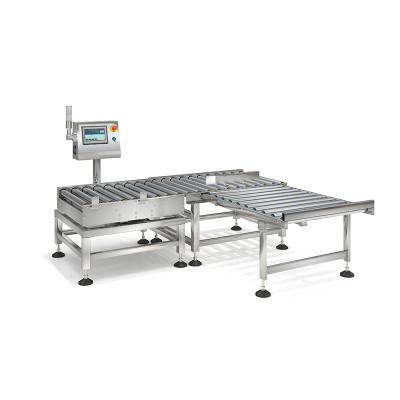
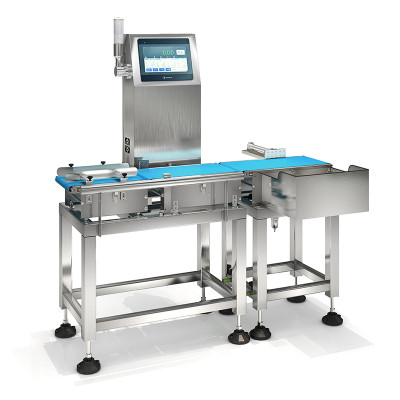
● Load Cell/Sensor: Heart of the beast—our sensors handle 1-2000g ranges with ±0.3-2g accuracy.
● Conveyor System: Variable-speed belts (5-90m/min standard; up to 300m/min on SWSR-750TC6) with Swiss PU food-grade material for gentle handling.
● Control Unit: 10-inch Weiluntong touchscreen running SameGram V1.0.5 software—supports 100 product formulas, multilingual UI, and three-tier logins (Worker/Admin/Engineer).
● Rejection Mechanisms: Customizable per food weight grader model—air blow (0.5-0.8MPa), push rods, swing arms, or tray tippers for delicate items.
● HMI & Integration: RS485/USB/Ethernet ports for ERP/MES hookup; NSK bearings and Jingyan motors for reliability.
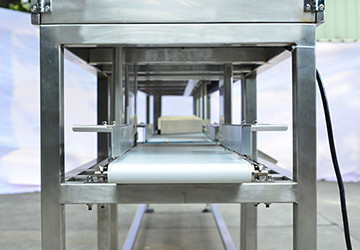
In our SWSD-4523L2 food industry weight sorter, the dual-layer waterproof design keeps the motor topside, dodging moisture in fish lines while maintaining a compact 450x230mm weighing platform.
Chapter 2 - Industrial Applications & System Types
2.1 Manufacturing Sector Applications
Food processing dominates: sort poultry like chicken feet by weight grades for uniform packaging, or grade shrimp in wet lines to hit export specs (e.g., Japan/Korea standards). One poultry client using our SWSR-750TC6 Food Industry Weight Sorter ramped from 10 to 18 tons daily, trimming damage by 60% via gentle tray ejection.
Pharma and hardware get love too—check vials or parts for fill accuracy. Seafood? Our SWS-5012L2-C6 Weight Grader excels in compact setups, handling irregular shapes up to 350x120mm with 99.3% precision.
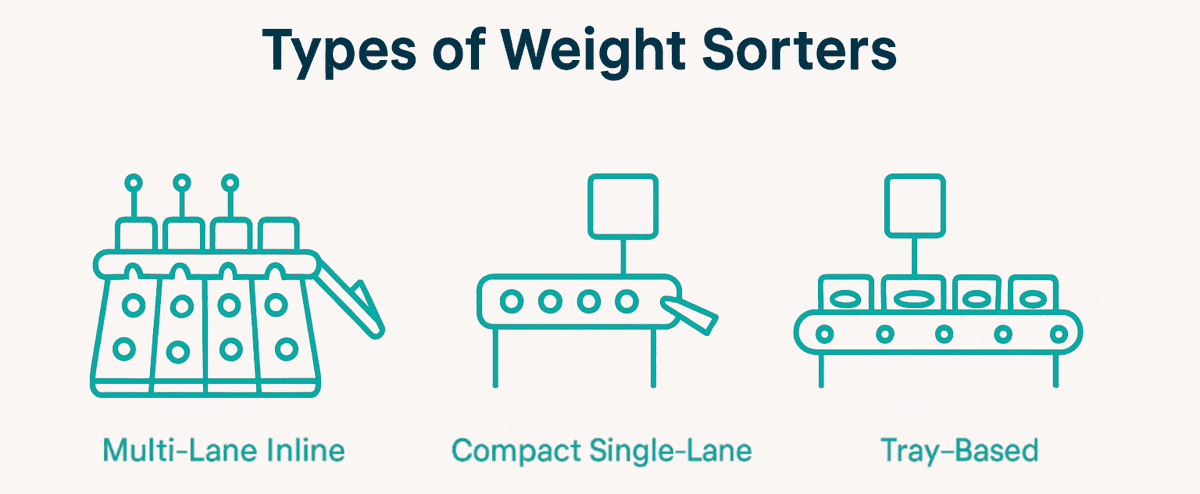
2.2 System Configuration Types
● Multi-Lane Inline (e.g., SWS-4523L2-C6 weight sorter): For high-throughput continuous lines; 1-20 grades, dual belts for seamless flow.
● Compact Single-Lane (e.g., SWS-5012L2-C6 food weight grader): Space-savers for small ops; modular rejects like flip plates.
● Tray-Based (e.g., SWSR-750TC6): Rotating trays for fragile items; 6-20 grades, speeds to 300m/min.
Pick by volume—our IP65-rated units thrive in wet zones, with customizable lanes to match your reject bins.
Chapter 3 - Pre-Operation Technical Checklist
Skip this, and you're courting 20% downtime from misalignment alone.
3.1 Power & Safety Verification
● Grounded three-hole socket (AC220V±10%, 50/60Hz, 350W max).
● Emergency stop test (cuts power instantly).
● No loose wiring—RS485 A/B terminals secure.
● Voltage stability (±10%).
3.2 Mechanical System Inspection
● Level surface (≤0.5° incline); feet locked.
● Belt tension (9-11mm gap to adjacent conveyors).
● Phototube alignment (clear view, no blocks).
● Reject mechanisms free (e.g., swing arms unobstructed).
3.3 Weighing System Calibration
● Platform empty for zero set.
● Static test with 20-80% load (e.g., 400g on 500g scale).
● Dynamic run: 8+ uniform passes.
For SameGram models, boot-up auto-zeros; full calib via touchscreen in <5 mins.
Chapter 4 - Operational Procedures & Best Practices
4.1 Standard Operating Procedure (SOP)
1. Login and select product from 100-formula library.
2. Set params: Target weight, upper/lower limits (±0.3g steps), speed (5-50m/min), reject mode (e.g., swing arm for poultry).
3. Calibrate: Static zero, then dynamic (belt on, 8 passes of sample).
4. Start: Hit "Run"—monitor real-time stats (pass rate, averages).
5. End: Stop, export USB logs (over/under counts), clear queues.
Pro tip: For seafood, dial filter to level 5 to ignore water drips; keeps false rejects under 1%.
4.2 Common Defect Signatures & Analysis
● Underweight: Low-density spots or air pockets—flag via lower limit.
● Overweight: Excess fill—triggers air blow.
● Use our zone sorting (1-10 zones) to batch by 20-30g increments; graphs show distribution for tweaks.
Our self-adjusting correction factors (0-2000) auto-fine-tune for speed variances.
Chapter 5 - Troubleshooting & Maintenance Protocol
5.1 Electrical Fault Diagnosis
● No display: Check power cable; reboot via knob (0 to 1).
● Fluctuations: Boost filter (0-9); inspect for vibes.
● No reject: Verify IO low-level inputs; test outputs on screen.
5.2 Mechanical Maintenance Schedule
| Frequency | Task | Details | ||
Daily | Clean belts/platform | Wipe debris; check phototube. | ||
| Weekly | Tension belts | 9-11mm gap; lube bearings. | ||
| Monthly | Calib check | Static/dynamic; export stats. | ||
| Quarterly | Full audit | Pro electrician for wiring. | ||
5.3 Weighing Accuracy Degradation Solutions
● Always zero: Adjust zero range; clear platform.
● Jumps: Tighten screws; up airflow shield.
● Busy alarm: Slow feed (under 200/min); extend reject delay (0-999s).
Error logs pinpoint issues—e.g., "Overload" means exceed 2.4kg; halt and clear.
Chapter 6 - Safety & Compliance Standards
6.1 Operational Safety Protocols
Lockout/tagout before tweaks; pros only for wiring. Our three-tier access blocks unauthorized changes—never bypass.
6.2 Environmental & Compliance Safety
IP65 guards against splashes; 304 SS meets FDA/HACCP. Install in 0-40°C, dry-ish spots; wear PPE for belts.
SameGram units tick ISO/CE boxes, with alarms for queues full or jams.
Chapter 7 - System Selection & ROI Analysis
7.1 Technical Specification Matrix
| Feature | SWS-5012L2-C6 | SWS-4523L2-C6 | SWSR-750TC6 |
| Range | 1-2000g | 1-2000g | 1-2000g |
| Accuracy | ±0.3-2g | ±0.3-2g | ±0.3-2g |
Speed | 5-90m/min | 5-90m/min | 1-300m/min |
Grades | 1-20 grade customizable | 1-20 grade customizable | 6-20 grades customizable |
| IP | IP65 | IP65 | IP65 |
7.2 ROI Calculation Framework
Tally scrap savings (e.g., 20% less waste) minus $5K install—payback in 12-24 months. Our AI cuts errors 60%, per poultry case studies.
DM SameGram for your ROI calc.
Chapter 8 - Integration & Data Management
8.1 Industry 4.0 Connectivity
Modbus TCP/IP for MES; auto-export CSV stats (passes, rates).
8.2 Traceability & Reporting
USB logs for 30,000 data; graphs for distribution—audit-ready.
Chapter 9 - Training & Certification Requirements
9.1 Operator Competency Matrix
● Level 1: Basics (4 hours, Worker login).
● Level 2: Params/Calib (8 hours, Admin).
● Level 3: Troubleshooting (20 hours, Engineer).
9.2 Certification Programs
HACCP basics; our OEM sessions cover annual recals.
Chapter 10 - Future Trends & Technology Roadmap
10.1 Emerging Technologies
AI visual-weight hybrids for shape+mass; our V1.0.5 already predicts drifts.
10.2 Sustainability Considerations
Energy-sip motors; recyclable SS cuts footprint.
Upgrade your line? Swing by samegram.com for SameGram's waterproof food weight grader—your food safety edge, backed by patents and global installs. Contact us, let's sort it out.
Related Hot-Sale Weigh Sorter
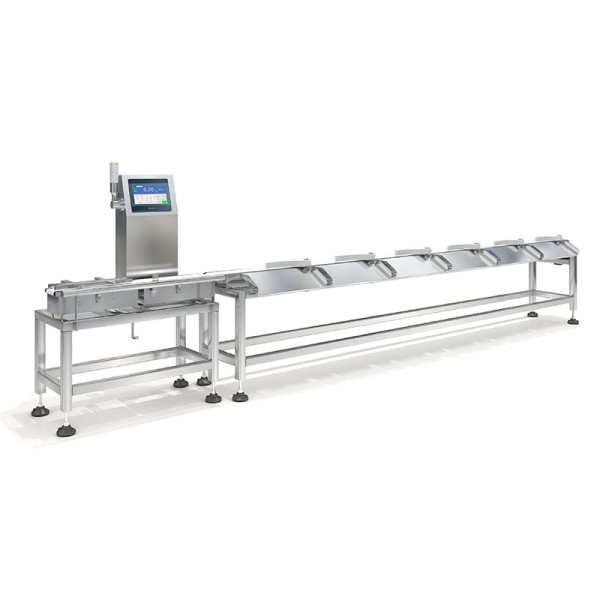
Six-arm weight sorter ensures precise, hygienic food-grade sorting with waterproof protection for fish, poultry, and seafood.
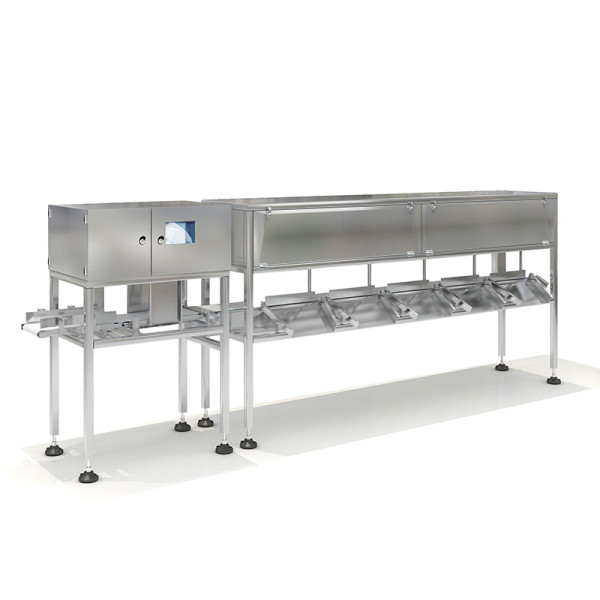
Dual-layer design with top motor provides waterproofing, precise sorting, and hygienic food-grade operation for fish and shrimp
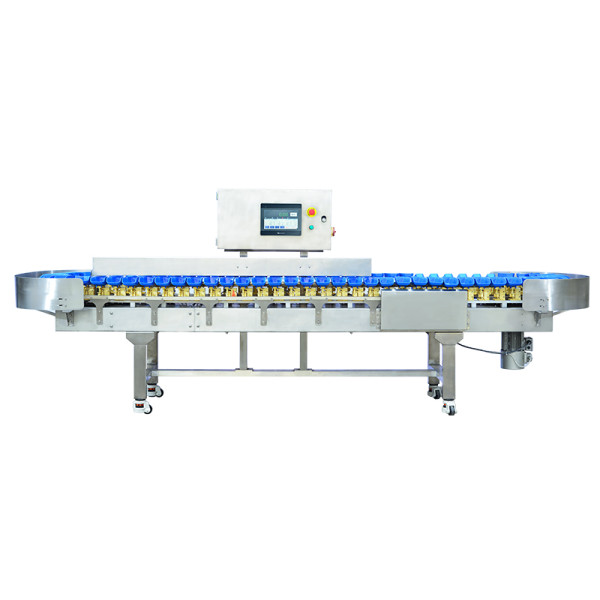
Tray weight sorter with IP65 waterproof, gentle handling, multi-level grading, and hygienic fast sorting for fish and seafood.