

Guide to Semi-Automatic Combination Weighers | SameGram
If you're in the food processing industry, dealing with fresh produce, seafood, or frozen meats, you know the struggle: getting consistent portions without wasting product or slowing down your line. Overfills eat into profits, underfills risk customer complaints, and manual weighing just can't keep up with demand. That's where a reliable Semi-Automatic Combination Weigher comes in—a smart system that combines weights from multiple platforms to hit your targets spot-on. As a seasoned automation engineer with over 15 years optimizing production lines, I've seen how the right weigher can transform operations, cutting labor by up to 40% and boosting accuracy to near perfection.

At SameGram, we're all about intelligent weight detection solutions that detect insufficient weights or missing parts right on the line. Our SBW-2512B12 Small Portion Linear Combination Weigher is a standout—built for semi-automatic setups with high-precision German components and food-grade materials. Trusted by processors worldwide, it's designed to handle tricky, irregular items like fruits, veggies, and aquatic products. In this guide, we'll break down everything from setup to maintenance, drawing on real-world specs and tips to solve your weighing woes. Ready to level up your line? Let's get into it—and if you're intrigued, head over to our Combination Weigher page for more or check the SBW-2512B12 Combination Weigher details to see it in action.
Chapter 1: Combination Weigher Product Overview
1.1 Product Definition and Working Principle
A Semi-Automatic Combination Weigher is essentially a dynamic portioning machine that uses multiple weighing platforms to calculate and combine the closest match to your target weight. SameGram's SBW-2512B12 Multihead Weigher employs a multi-platform dynamic combination mechanism: operators place products on individual belts, sensors weigh them in real-time, and an intelligent algorithm selects the optimal combo—either in "fastest" mode for high-speed runs or "optimal" mode for minimizing variance.
This is perfect for irregular materials that traditional scales mangle, like wet seafood or fragile fruits. The process starts with manual loading onto the 12 heads, where photoelectric sensors detect stability. The system then runs a target weight optimization algorithm, discharging the selected portions via a central conveyor while rejecting or recycling others. It's semi-automatic at its best—human input for quality checks, machine smarts for precision. In practice, this cuts giveaway (excess product) by ensuring combos stay within ±0.1-3g of your goal, based on product type.
1.2 SameGram Portioning Machine Applications
SameGram's Semi-Automatic Combination Weighers shine in fresh sectors: think portioning fruits and vegetables, aquatic products like shrimp or fish fillets, and frozen meats for bags or trays. It's built for semi-automatic or full-auto integration, reducing manual labor in high-input industries. For instance, in poultry processing, it ensures exact 500g packs without bruising; in seafood, it handles sticky items gently. We've seen clients in Malaysia and Belarus integrate it seamlessly, saving on labor and hitting 99.8% accuracy. Explore how it fits your setup on our product page.
Chapter 2: Combination Weigher Technical Specifications and Performance Parameters
2.1 Weighing Performance
Accuracy is the name of the game. The SBW-2512B12 Semi-Automatic Combination Weigher offers a display index value of 0.01g for fine readings, with single-platform ranges from 1-2000g (or 1-500g optimized for small portions) and combined up to 10-6000g. Expect precision of ±0.1-3g, varying by product—tighter for uniform items, looser for irregular ones like veggies. Speed hits 30 pieces/min, making it ideal for mid-volume lines without bottlenecks. Pro tip: Test with your products; factors like moisture can tweak these, but our dynamic compensation algorithm keeps it consistent.
2.2 Semi-Automatic Combination Weigher Mechanical Parameters
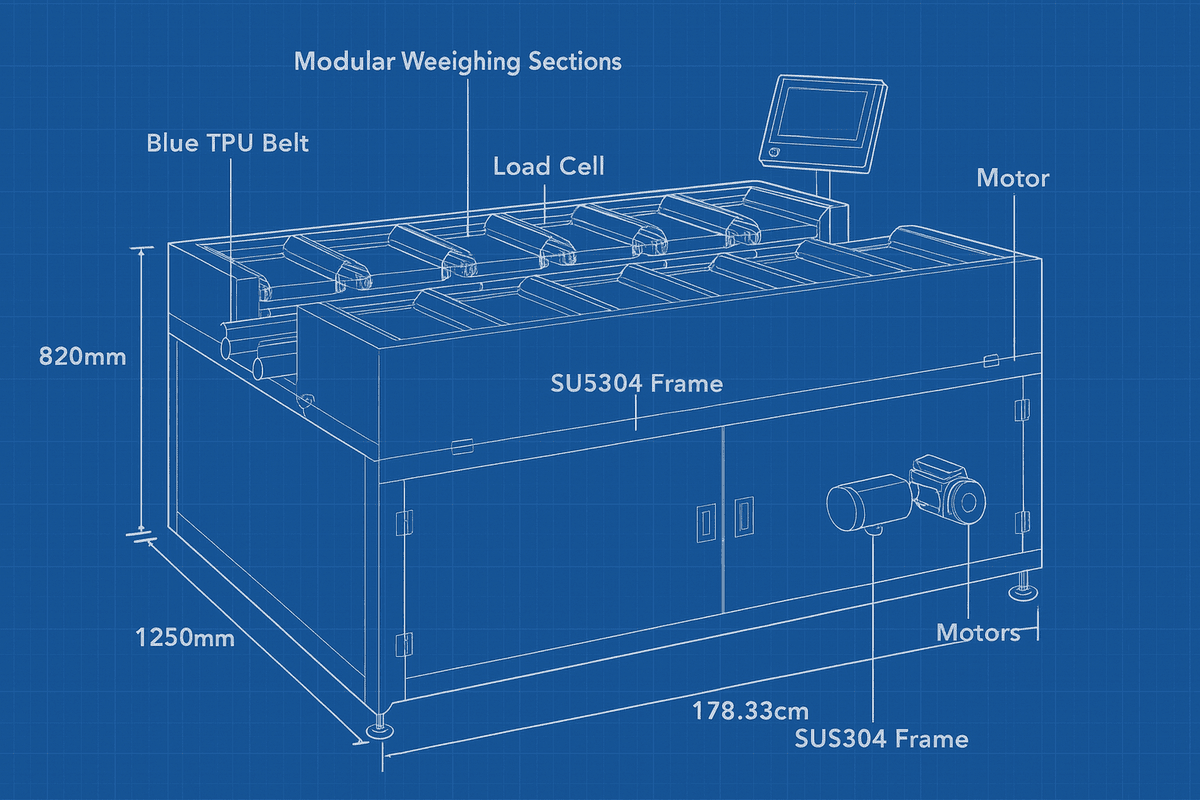
Durability meets functionality here. Each weighing section is L250mm × W120mm, perfect for small to medium items. The working height adjusts 820±50mm for operator comfort. Materials? SUS304 stainless steel structure for corrosion resistance, paired with blue food-grade Polyurethane Thermoplastic (TPU) conveyor belts that release sticky goods effortlessly. Aluminum rollers (stainless optional) ensure smooth operation, and the modular layout allows quick swaps.
2.3 Electrical and Environmental
Power it with single-phase AC220V±10% (0.4kW; three-phase AC380V optional) for reliable starts. It needs dry compressed air at 0.5-0.8MPa for pneumatic functions. Environmentally, it operates in 0-40°C and 10-90% RH (no condensation), with storage from -20-60°C. Protection levels range from IP30 standard to IP54/IP65 for wet washes—crucial for food safety. Noise stays under 75dB, and data exports via USB for traceability. SameGram builds these to last in tough spots, with overload protection on sensors.
Chapter 3: Mechanical Structure and System Design
3.1 Overall Architecture
The SBW-2512B12 Multihead Weigher features a three-conveyor structure: inlet for feeding, central weighing zone, and outlet for sorting/discharge. The 12-unit modular layout arranges platforms in a linear row, allowing easy access for loading. This setup minimizes product damage during transfer, with a central belt activating only for selected combos—efficient and gentle.
3.2 Core Components
At the heart is the intermediate weighing mechanism: conveyor motors drive belts, SICK photoelectric sensors trigger precise reads, and German Mettler Toledo load cells deliver sub-gram accuracy. Stepper motors (with tunable pulses, deceleration times, and speeds) ensure controlled discharge, while NSK bearings add longevity. Overload anti-overturning protection safeguards against jams, making it robust for daily use.
3.3 Cleaning and Hygiene Design
Hygiene is non-negotiable in food lines. The detachable belt design lets you snap off TPU conveyors for quick rinses—no tools needed. IP65 waterproofing seals out dust and moisture, and the SUS304 frame resists rust. For a fast clean: Power off, remove belts, wipe with non-corrosive sanitizer, and reassemble in under 5 minutes. This keeps downtime low and complies with HACCP standards— a must for our clients in moist environments.
Chapter 4: Portioning Machine Control System and Software Architecture
4.1 Hardware Platform
Powered by a Siemens PLC core for rock-solid control, the system includes a 10-inch WEINVIEW color touchscreen for intuitive ops. Our proprietary "Online Weighing Control System V1.0.5" handles everything from algorithms to interfaces, with full Ethernet for Industrial 4.0 connectivity.
4.2 Software Function Modules
The software is user-friendly: A recipe management system stores up to 100 presets for quick switches. Dynamic compensation algorithms adjust for vibrations or drifts, ensuring accuracy. USB export traces data for audits, and multi-language support (Chinese/English) makes it global-ready. Real-time alerts via multifunctional lights (yellow for insufficient, green for qualified, red for excessive) keep you informed.
Chapter 5: Human-Machine Interface Operation Guide
5.1 Startup and Initialization
Starting up of our Multihead Weigher is simple: Rotate the control box switch to power on—the welcome screen appears, then the main interface. Before that, confirm grounding, level installation, and remove shipping screws. Hit "Initialization" for a self-check: It starts the central belt, then platforms 1-6 with orange lights, delays 3s, adds 7-12, clears zeros, and stops. One-key zeroing resets all platforms.
5.2 Main Interface Functions
The dashboard shows real-time status: Query up to 2000 production records over 7 days, monitor with alarm lights (yellow/green/red), and control start/stop/clear. "Clear Platforms" runs all belts to empty residue; "Clear Stats" resets counts. For running, press "Start" to begin combinations.
5.3 Recipe Settings
Edit product names (<10 chars), set target weights with ± tolerances. Choose modes: Weight-only or weight+quantity. Prioritize combos, limit to 2-5 platforms for high combination success probability, set forced discharge heads (1-12), and optimize no-combo counts (0-20) to boost utilization. Platform feed times (0-300s) and speeds (up to 30,000 pulses) fine-tune for your products.
5.4 Platform Parameter Configuration
Admin-access: Set max range (g/kg/t), manual zero limits, zero tracking (range/rate). Stability detection (time/range in 0.1d units), static sampling (default 200), and filter strengths (higher for stability, slower response). Write changes and test—crucial for consistent reads.
5.5 Disable Platform Function
Touch this key to enter the "Prohibited Scale" interface. Then press the different scales on the interface. The unit scale corresponding to the number will be shielded, and the status will display "Prohibited". This scale will not be combined. Touch this key and the corresponding number block again to restart the unit scale, and the status will display "Enabled".
5.6 Calibration Program
Calibrate each of 12 platforms independently as follows step:
1. Enter the weight of the calibration weight first.
2. Select the corresponding scale.
3. Clear the items on the corresponding scale and then press the tare calibration button.
4. Place the calibration weight with the corresponding weight value on the corresponding scale.
5. Press the load calibration button, then remove the calibration weight to complete the calibration.
Set dynamic compensation for motion variances. Do this quarterly or after moves for peak accuracy.
Chapter 6: Installation and Debugging
6.1 Mechanical Installation
Place away from vibrations on a level floor. Ensure platform alignment precision—use a spirit level. Confirm shipping fixings are removed to avoid instability.
6.2 Electrical Connections
Wire power per specs (ground mandatory), connect air lines and regulate to 0.5-0.8MPa. Route sensor/comms cables neatly to prevent interference.
6.3 Initial Debugging
Test motors: Set stepper params (pulses, decel time, speed), run each platform—green lights confirm. Calibrate photoelectric switches for position, verify alarm lights. Run a full cycle with dummies to dial in.
Chapter 7: Weighing Equipment Maintenance and Care
7.1 Daily Maintenance
Wipe belts and check for wear; clear debris; drain air filters. Takes 10 minutes post-shift to prevent buildup.
7.2 Periodic Care
Verify accuracy monthly with weights; lubricate bearings/transmissions quarterly; inspect seals for aging. Use non-corrosive lubes only.
7.3 Preventive Maintenance
Replace belts every 6-12 months (stock spares); keep inventory of sensors/motors. SameGram offers kits—contact us for tailored plans.
Chapter 8: Fault Diagnosis and Troubleshooting
No. | Issue | Reason | Solution | |||||
1 | The power light is not on | 1. Incorrect power supply. 2. The circuit breaker tripped. 3. The fuse is damaged. | 1. Connect the correct power source. 2. Turn on the circuit breaker. 3. Replace with the same type of fuse. | |||||
2 | Static weighing instability | 1. Check if the four feet of the device are unbalanced. | 1. Adjust the four feet to achieve balance. | |||||
3 | Large dynamic weighing deviation | 1. Check the filter coefficient settings.
2. Check the percentage of valid data. | 1. If the parameter is too small, please increase the parameter setting appropriately.
2. Increase the proportion of valid data. | |||||
4 | Large deviation between static and dynamic values | 1. The dynamic compensation parameters may be incorrect. | 1. Please re-set the dynamic compensation parameters or manually enter the weighing compensation parameters. | |||||
5 | Inaccurate static weighing values | 1. The equipment may be incorrectly calibrated. | 1. Please calibrate the equipment again. | |||||
6 | Dynamic sorting without data | 1. The position of the photoelectric switch may have changed.
2. The photoelectric switch is damaged. | 1. Adjusting the position of the photoelectric switch enables direct beam transmission.
2. Replace with the same model of photoelectric switch. | |||||
7 | The motor does not turn after starting. | 1. The shutdown time may be too short.
2. The motor interface may be loose. | 1. After each abnormal shutdown, wait one minute before turning the computer back on.
2. Tighten any loose motor connector cables. | |||||
8 | Eliminate inactive | 1. The pressure of the pneumatic device may be too low. | 1. Please increase the air pressure of the pneumatic device. | |||||
9 | Touchscreen prompts you to press emergency stop. | 1. Check if the emergency stop switch is pressed. | 1. Loosen the emergency stop switch | |||||
Chapter 9: Data Management and Communication
9.1 Data Recording
● Auto-saves production data;
● One-key USB export for traceability. Logs weights, times, and alerts for compliance.
9.2 System Integration
● Ethernet for Industrial 4.0;
● Modbus protocol links to PLCs;
● Sync with print/label systems for seamless ops.
Chapter 10: Safety and Compliance
10.1 Operational Safety
● Use emergency stops for anomalies;
● Avoid touching moving parts;
● Disconnect for cleaning.
10.2 Electrical Safety
● Confirm voltage/grounding;
● Keep the control box dry;
● Only qualified electricians handle wiring.
10.3 Food Safety
● SUS304/TPU materials are certified food-grade;
● Hygienic design meets standards—no rust, easy clean.
Wrapping up, investing in a SameGram combination weigher like the SBW-2512B12 Semi-Automatic Combination Weigher isn't just about tech—it's about streamlining your business for efficiency and quality. We've helped countless lines achieve that; why not yours? Drop us a line for a custom quote or demo.
● Explore our complete equipment catalog: SameGram Product Portfolio
● Learn more about our engineering standards: About SameGram
● Connect with an automation specialist today: Contact SameGram
SameGram Hot-Sale Related Products
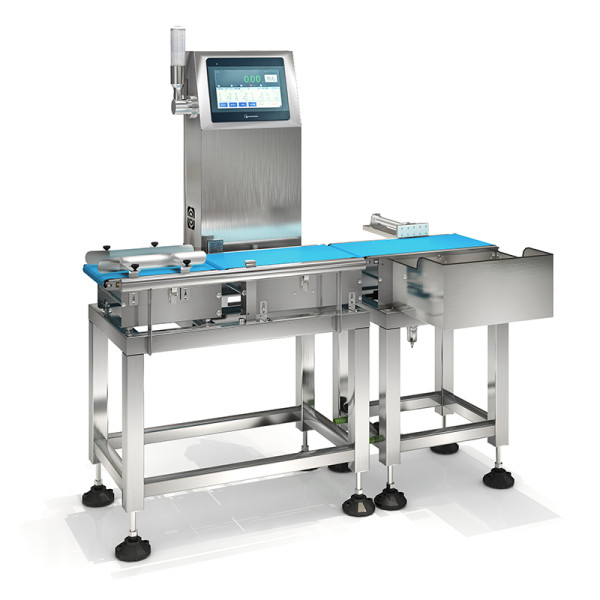
SCF-4523L3 is a hygienic food checkweigher with high precision and hi speed checkweighing for food industry use,easy to integrate
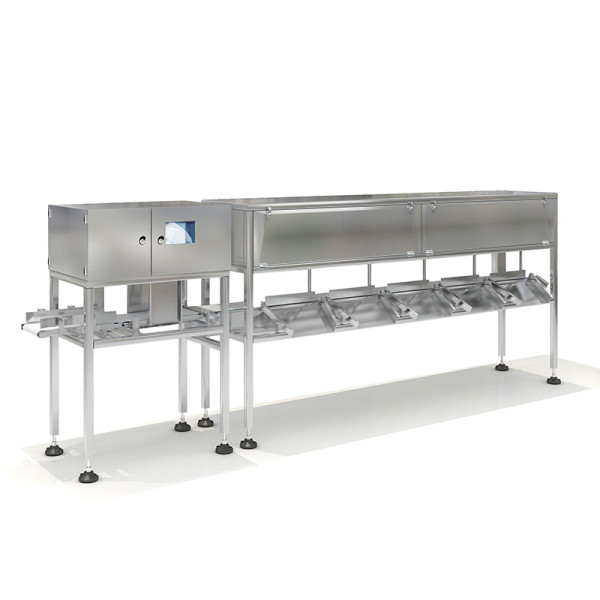
Dual-layer design with top motor provides waterproofing, precise sorting, and hygienic food-grade operation for fish and shrimp
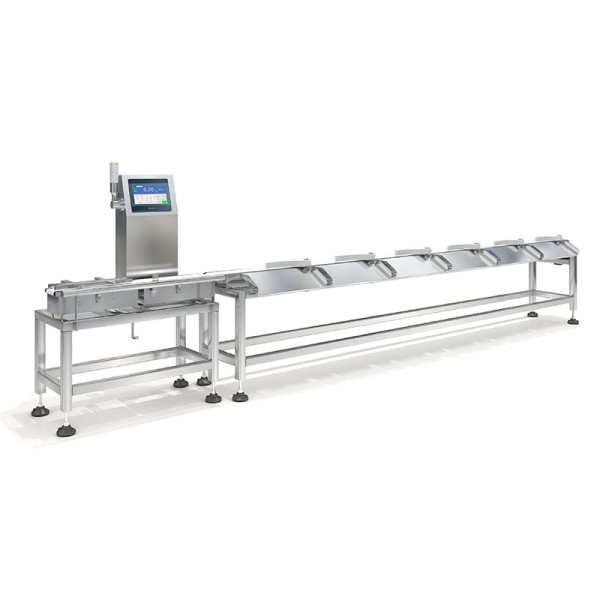
Six-arm weight sorter ensures precise, hygienic food-grade sorting with waterproof protection for fish, poultry, and seafood.
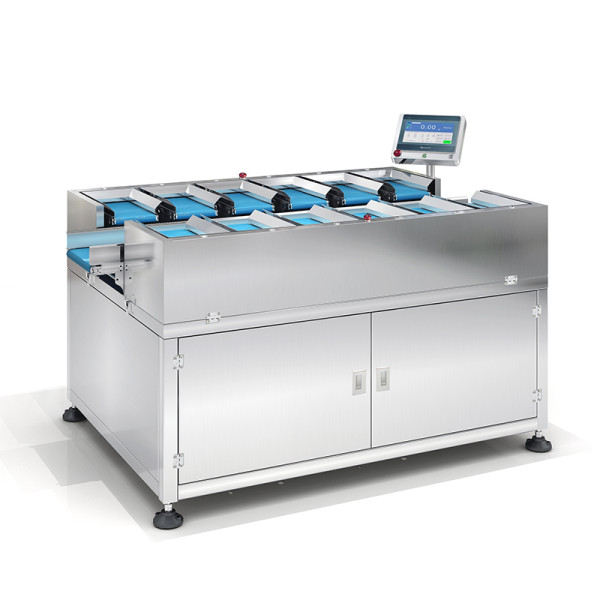
SBW2512B12 is Semi-Automatic Linear Combination Weigher for Flexible, High-Precision Portioning of Small and Irregular Products
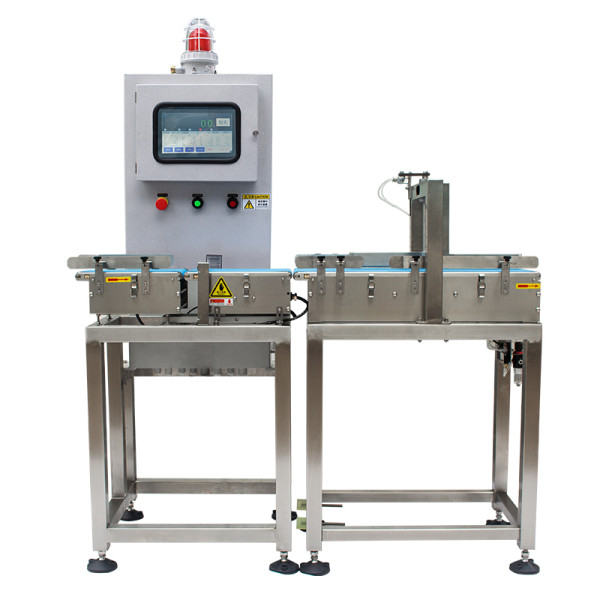
SC-EP is a dynamic checkweigher for Ex zones, suitable for production lines with special requirements for explosion-proof