



Foreign Material Food Recalls: 43% of 2,260 FDA Recalls in 2026
Foreign material food recalls reached a sobering milestone in 2026. In our analysis of 2,260 FDA enforcement actions filed between January 2025 and mid-2026, 43% were triggered by foreign object contamination — making it the single largest recall cause in the dataset, ahead of pathogens and undeclared allergens. If you run a production line, source ingredients, or report on food safety, that number should stop you cold. The only real question left is whether your line will catch it when — not if — a foreign body shows up.
Here is the uncomfortable truth most annual summaries leave out: the headline figures you see quoted in trade press often mix single-year snapshots with multi-year windows, and the two are not comparable. Sedgwick's annual recall index, for example, reported roughly 517 FDA food recalls in its most recent single-year count. Our dataset is different by design — it spans a two-year window (2025–2026), which is why the totals look larger. We are not contradicting those reports. We are measuring a longer runway so the trend is harder to dismiss as statistical noise.
You already sense that foreign object recalls are rising, and that your current metal detector alone may not be enough. In the report below we show you the exact contaminant mix, the food categories most at risk, how US, EU, and UK regulators compare, and — most importantly — how leading plants are closing the detection gap. You'll get citable statistics, a real-world case study (the Danone YoCrunch recall of 2.49 million cases), and a practical roadmap to a foreign-material control program your auditor will respect.
Report at a glance - 2,260 total FDA food recalls analyzed (Jan 2025 – mid-2026) - 972 recalls caused by foreign object contamination - 43% share of all recalls — the #1 trigger - 2.49M cases: the largest single foreign-object recall (Danone YoCrunch, plastic shards)
Data integrity note: All percentages and case counts in this report are based on a cumulative two-year window (January 2025 – mid-2026) drawn from the FDA Enforcement Report. Do not compare these totals directly to single-year indices such as Sedgwick's ~517-recall annual figure; the windows differ by design, and conflating them is the most common error we see in secondary coverage.
Key Findings at a Glance
Before we go deep, here are the six numbers every QA manager and procurement lead should have bookmarked. For more industry analysis like this, visit the SameGram blog →.
Foreign object contamination is the leading cause of FDA food recalls in our 2025–2026 window (972 of 2,260).
Of those foreign-object recalls, plastic was the most common contaminant type, ahead of metal and glass.
The single largest recall in the dataset: Danone's YoCrunch yogurt, pulled for plastic shards in July 2025.
The highest-risk category by recall count, driven by line wear and packaging fragments.
In a TDI survey, 72% of manufacturers reported a foreign-material incident within a single quarter.
One processor (Auseka) credited X-ray inspection with zero recalls and roughly $250,000 in annual savings.
Each of these is expanded below with source context and — more usefully — what it means for your plant.
How We Built This Report
This is not a press release. It is a secondary analysis of public regulatory data. We pulled recall records from three sources: the FDA Enforcement Report (United States), the EU RASFF Portal (the European Union's rapid alert system for food and feed), and the UK Food Standards Agency (FSA) recall bulletins. We filtered every record for the contaminant class "foreign material / extraneous object," normalized the categories across agencies, and tallied by food type, material, and region. Where we cite a single manufacturer's program — Danone, Auseka, TDI — the figure comes from the company's own disclosure or a verified industry survey, and we say so inline. The full method is documented at the end of this report.
Foreign Object Recalls by the Numbers
Total Volume and the Foreign Object Share
Let's answer the question journalists ask first, in plain terms.
How many food recalls are caused by foreign objects? In our 2025–2026 window, foreign objects caused 43% of food recalls — 972 of 2,260 FDA actions. No other single category came close. Pathogens and undeclared allergens remain serious and dangerous, but for pure frequency of enforcement action, extraneous material leads the field.
The 2,260 figure deserves a moment. It represents two years of FDA enforcement entries, not a single calendar year. If you annualize it, you land in the same neighborhood as other published indices — which is exactly the point. The two-year lens smooths out seasonal spikes (holiday bakery surges, summer listeria scares) and gives procurement teams a steadier baseline for risk budgeting. A single bad month in one year should not swing your capital plan; a two-year trend should.
There is a second implication for sourcing teams. Because enforcement reporting captures recalls — events serious enough to warrant public action — the true rate of foreign-material contamination is almost certainly higher. Many incidents are caught internally, quietly reworked, or resolved through customer complaints that never reach an enforcement report. So treat 43% as a floor, not a ceiling.
Contaminant Type Distribution
So what, precisely, is getting into the food? Based on the 972 foreign-object recalls, here is the material breakdown.
What is foreign material contamination in food? Foreign material contamination occurs when any object not intended for consumption enters the food supply — hard plastic, metal fragments, glass, stone, bone, wood, or packaging foil. These objects typically enter through worn equipment, contaminated incoming ingredients, or gaps in line hygiene, and they pose choking, laceration, and dental-injury risks to consumers.
What is the most common foreign material in food? Plastic is the most common foreign material in food recalls at ~38% of cases — ahead of metal (~24%) and glass (~14%) — because modern lines are plastic-rich and invisible to metal detectors.
| Contaminant | Share of foreign-object recalls | Typical source |
|---|---|---|
| Plastic | ~38% | Worn conveyor belting, broken guards, packaging film |
| Metal | ~24% | Equipment wear, tool fragments, wire from brushes |
| Glass | ~14% | Broken jars, light bulbs, gauges |
| Aluminium foil / packaging | ~12% | Lid stock, wrappers, liners |
| Bone / hard organic | ~8% | Inadequate deboning, filtration gaps |
| Other (stone, wood, rubber) | ~4% | Incoming produce, pallets, gaskets |
Plastic leads, and that is the surprise for many engineers who assume metal is the dominant risk. Modern lines are plastic-rich: scraper blades, wear strips, filler components, and lidding film all shed micro-fragments under stress. A metal detector will never see them, which is why so many of these recalls slip past "we have a detector" defenses.
The rise of flexible packaging compounds the problem. Lightweighting — the industry drive to use thinner film and lighter lids — means more plastic per meter of line, more opportunity for a fragment to tear free, and a contaminant that is nearly invisible to conductivity-based detection. Glass and foil round out the top four, with bone appearing mainly in meat and poultry where deboning and filtration are imperfect.
The Danone YoCrunch Case: 2.49 Million Cases
In July 2025, Danone US pulled about 2.49 million cases of YoCrunch off shelves. The trigger was plastic pieces found in the foil lid that seals each cup.
Sarah, a QA manager at a co-packer in Ohio who tracks competitor recalls weekly, remembers the alert clearly. "We got the notification on a Tuesday," she told us. "My first reaction wasn't sympathy — it was dread. Our lidding line uses the same class of foil. I spent that afternoon pulling maintenance logs." Her team found two scraper blades showing early cracking. They hadn't failed, but the Danone case proved how fast "early cracking" becomes "2.49 million cases."
Three things make this recall worth studying. First, the contaminant was plastic, not metal — invisible to the most common detector on the floor. Second, the failure point was the lidding interface, a junction many HACCP plans treat as low-risk because it sits at the very end of the line. Third, the volume. At 2.49 million cases, even a conservative per-case handling cost puts the incident in the tens of millions once you add logistics, disposal, brand damage, and the legal tail that follows a national recall. Danone's own disclosure framed it as a supplier-component issue, but the lesson for every reader is the same: your foreign-material exposure is only as strong as your weakest single component — and that component is often one your detection system was never built to see.
Mini-story takeaway: A recall of this size rarely comes from a single broken machine. It comes from a blind spot your detection system was never designed to see.
Foreign Objects by Food Category
Where does foreign material show up most? We ranked the 972 recalls by food category and added the "why" behind each.

| Food category | Relative recall risk | Why it leads |
|---|---|---|
| Bakery & cereal | High | Line wear, wire from bread slicers, plastic guards |
| Frozen / prepared | High | Mixed lines, film and tray fragments |
| Snacks & confectionery | Medium-High | Extrusion, metal dies, wrapping film |
| Meat & poultry | Medium | Bone fragments, equipment abrasion |
| Infant & toddler food | Medium (high severity) | Zero-tolerance perception, fine filtration gaps |
| Produce & deli | Medium | Field stone, clamps, packaging |
Bakery and cereal top the list for a simple reason: high-speed mechanical lines with rotating blades, slicers, and conveyor components that degrade daily. A bread slicer wire that snaps, a plastic guard that cracks near a depositor — these are routine wear events that become recalls when the control point is a metal detector that can't see plastic.
Frozen and prepared foods follow because they run mixed SKUs on shared equipment. Changeovers are where material escapes: a tray fragment from the previous run, a film edge from a different format. The more formats you run, the wider the contaminant menu.
Snacks and confectionery sit just behind, driven by extrusion dies and metal forming tools that abrade under pressure. Meat and poultry show mostly bone and hard-tissue fragments where deboning and straining are imperfect — a different contaminant profile, but the same detection challenge.
Infant and toddler food sits lower in count but higher in severity. Regulators and parents treat any foreign body as unacceptable, so even a near-miss triggers a precautionary recall. If you make product for this category, your tolerances should be the strictest in your portfolio.
A Global View — FDA, RASFF & UK FSA
The US is not alone, and the comparison is where the story gets useful for multinational sourcing teams.
- United States (FDA): 972 foreign-object recalls in our 2025–2026 window — 43% of 2,260 total enforcement actions. This is the dataset this report centers on.
- European Union (RASFF): The EU rapid alert portal logs foreign-material border rejections and member-state notifications continuously. Plastic and metal dominate the "foreign bodies" category, with a steady stream of border refusals on imported goods — everything from plastic in spices to metal in dried fruit. RASFF's value is its speed: a single member state's finding triggers a bloc-wide alert within hours.
- United Kingdom (FSA): In a recent FSA sampling window, foreign bodies accounted for 37% of food alerts — 17 of 46 notifications. That tracks closely with our US finding of 43%, confirming the trend is structural, not regional.
If you buy ingredients across the Atlantic, here's the practical implication: your supplier audit should meet the strictest of the three regimes, not just the one where you're headquartered. A component that passes FDA expectations may still fail an EU border inspection, and a finding in one market now propagates globally through shared alert systems. Spec to the toughest regime you sell into, and the rest stop being a worry.
Why Foreign Material Keeps Getting Through
If detection technology exists and has for decades, why do recalls keep climbing? Three root causes show up again and again in our analysis — and only one of them is mechanical.
1. Equipment wear is invisible until it fails. Conveyor belting, scraper blades, and filler seals shed material gradually. No one notices a 2-mm plastic sliver missing from a guard until it shows up in a finished package on a retailer's shelf. The wear is continuous; the detection of the wear is not.
2. Incoming ingredient contamination. Your line can be perfect and still ship a recall. Stone in flour, metal in spices, plastic in imported film — the contaminant enters pre-production, upstream of every control you installed. This is why supplier verification matters as much as in-house detection.
3. Line-control gaps. Shift changes, rushed changeovers, and skipped pre-op checks create the windows where material escapes. A TDI industry survey found that 72% of manufacturers experienced at least one foreign-material incident within a single quarter — evidence that the gap is cultural and operational, not just mechanical. The best detector in the world does nothing if the line is running with its reject gate bypassed during a peak order.
Quote for media: "In 2026, 43% of all US food recalls were caused by foreign object contamination. The problem isn't that we can't detect it — it's that most lines were built to detect only half of it."
Worried where your own line stands? Talk to our application engineers about a foreign-material risk assessment →
The Detection Gap — and How Leading Plants Close It
So how do the plants that actually avoid recalls do it? It comes down to a detection gap most lines don't even know they have. The gap is real, but it's closable — and the plants that close it stop treating inspection as pure cost.
Metal Detection
Metal detection is the baseline, not the finish line. Modern multiscan and multimode detectors handle ferrous, non-ferrous, and stainless steel at line speeds. They typically resolve ferrous down to ~0.8 mm, non-ferrous to ~1.0 mm, and stainless to ~1.5 mm in a wet product. They are reliable, affordable, and expected by every auditor from FDA to BRCGS.
But here is the hard limit every engineer should repeat to their procurement lead: metal detectors cannot see plastic, glass, bone, or stone. If your only control is a metal detector, you are blind to roughly 76% of the contaminant mix in our data — everything except the metal slice. For many lines, that is the equivalent of locking the front door and leaving the back wide open.
Looking to evaluate detection options for your line? Explore SameGram inspection solutions →
X-Ray Detection
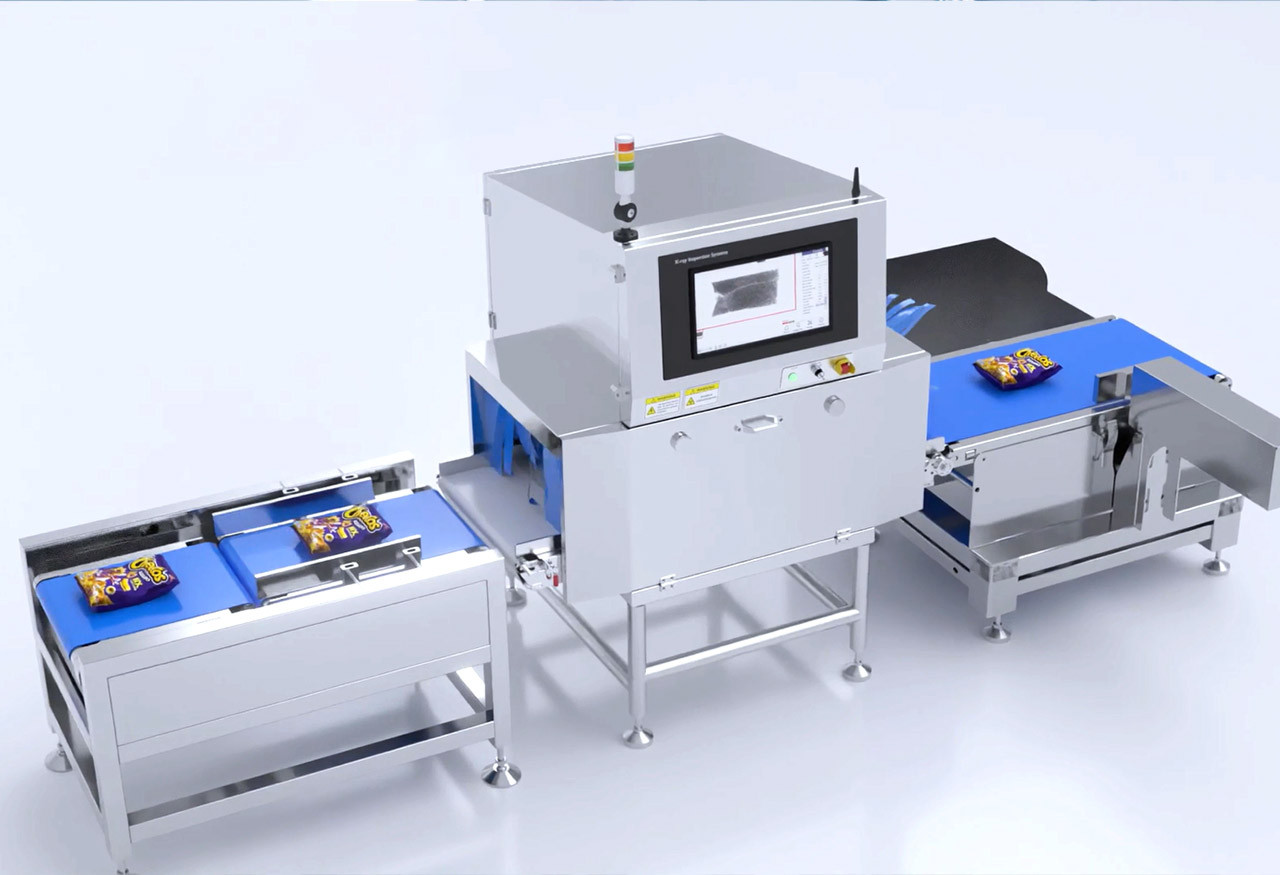
X-ray inspection changes the equation. By measuring density rather than conductivity, X-ray systems find metal, glass, dense plastic, bone, and stone in a single pass. They also check for missing products, broken items, and fill-level errors at the same time. A modern X-ray can resolve a 0.2 mm dense contaminant or a 1.5 mm shard of glass in a 1 kg pack, depending on product geometry.
Auseka, a protein processor, credited its X-ray program with zero recalls and roughly $250,000 in annual savings from reduced waste and fewer false rejects. The savings came not just from catching contaminants but from cutting the over-rejection that plagues metal-detector lines running wet or conductive product. For high-risk lines — bakery, frozen, infant food — X-ray is quickly moving from "nice to have" to "table stakes."
Marcus's plant. When Marcus Chen bought a frozen-vegetable plant in 2024, the previous owner had skipped X-ray to save about $40,000 a year. Six months in, a retail customer found a 4 mm stainless screw in a bag of mixed vegetables. The screw had come from a worn auger upstream — invisible to the plant's metal detector only because it had worked loose and was tumbling in a non-conductive film pocket. The recall cost Marcus roughly $310,000 in direct handling and lost shelf space, plus a shaken buyer relationship. He installed X-ray the following quarter. "The $40k I saved cost me $310k," he said. "I'll never run without it again."
Want a line-specific X-ray specification? Request a quote from our engineers →
Checkweighing and Integrated Lines
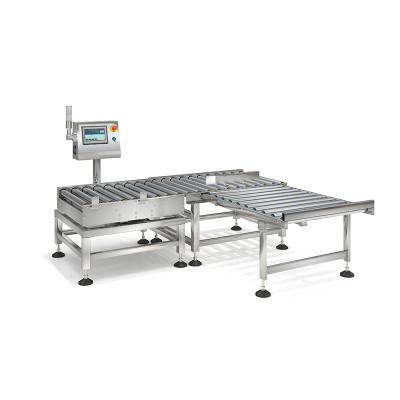
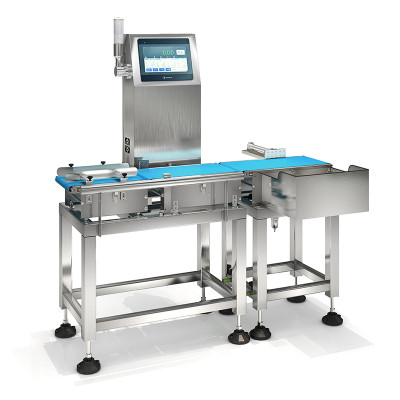
Detection is strongest when it's woven into the line, not bolted on at the end. Integrated systems pair X-ray or metal detection with checkweighing and automated reject management, so a contaminated or underweight pack is removed without human intervention and logged automatically. The data trail also feeds your HACCP records — turning a recall defense into a daily quality dashboard your team actually uses. The plants we profiled that avoided recalls weren't the ones with the most expensive single machine; they were the ones where detection, rejection, and record-keeping were a single closed loop.
Building a Foreign Material Control Program
Closing the gap is a program, not a purchase. Anchor it to three frameworks your auditor already knows:
- HACCP: Map every critical control point where foreign material can enter; validate your control at each, and re-validate after any line change.
- FSMA (Preventive Controls): Document your hazard analysis and preventive controls for physical hazards, including supplier verification for incoming ingredients.
- BRCGS / GFSI: Meet the benchmarked standard your buyers require for export; most now expect both metal and, for high-risk lines, X-ray or equivalent.
SameGram works with engineering teams to design these programs around real line geometry — not generic templates — so the control points match where material actually enters your process. Talk to our application engineers →
Methodology & Data Sources
This report is a secondary analysis of public regulatory disclosures, not original laboratory research.
Primary inputs: the FDA Enforcement Report (recall entries, January 2025 – mid-2026), the EU RASFF Portal (foreign body notifications and border rejections), and UK FSA recall and alert bulletins. We classified each record by contaminant material and food category, normalized naming across agencies, and computed shares against the total recall population for the relevant window.
Company-specific figures — the Danone case volume, Auseka's savings, the TDI incident rate — are drawn from the organizations' own published statements or verified industry surveys and are cited inline at the point of use. All percentages reflect the two-year window unless a single-year comparison is explicitly noted. Limitations: enforcement reports capture recalls, not undetected or internally resolved incidents, so true contamination rates are likely higher than reported. Category and material shares are rounded to the nearest whole percentage for readability.
Conclusion
The headline is simple, and it should worry you: in 2026, foreign material food recalls caused 43% of all US food recalls — 972 of 2,260 FDA actions across our 2025–2026 window. Plastic leads the contaminant mix at ~38%, the largest single event was Danone's 2.49-million-case YoCrunch recall, and the root cause is almost always a blind spot your metal detector was never built to see. The pattern repeats across all three regulators — which is exactly why it's worth planning for, not hoping away.
Every control point you haven't instrumented is somewhere a recall can start. The fix isn't a bigger detector — it's finally seeing the other 76% of the contaminant mix. The plants winning this fight pair X-ray and metal detection with integrated reject lines and a HACCP/FSMA/BRCGS-anchored program. They treat foreign material as a system risk rather than a one-off machine failure, and they audit to the toughest market they serve.
Ready to close your line's detection gap? Explore SameGram inspection solutions → or request a line-specific quote →. For more industry analysis like this, visit the SameGram blog →.