


Dynamic Checkweigher Rejection Failure: Troubleshooting
1. Introduction: The High Cost of Unrejected Off-Weight Packages
In modern high-speed packaging lines—whether in food processing, pharmaceutical manufacturing, chemical packaging, or consumer goods—a dynamic checkweigher serves as the final barrier of quality control. Operating continuously at speeds exceeding hundreds of packs per minute, these automated inspection systems ensure that every single item leaving the facility strictly complies with nominal weight specifications, trade metrology regulations, and label claims.
However, even the most sophisticated load cell technology becomes useless if the rejection mechanism fails to act. Imagine a high-volume line where an underfilled container or an overfilled package passes across the weighing belt, triggers an out-of-tolerance signal on the Human-Machine Interface (HMI), yet continues straight down the line unhindered. The consequences are immediate and severe: costly product giveaway, brand-damaging retailer fines, potential batch recalls, and severe non-compliance penalties.
At SameGram, we have dedicated years of engineering excellence to perfecting inline weight inspection and automated sorting technology. We know that when a checkweigher rejection mechanism stops functioning properly, plant maintenance teams cannot afford hours of trial-and-error troubleshooting. This comprehensive field guide provides maintenance engineers, plant operators, and quality managers with a structured, step-by-step diagnostic framework to identify, isolate, and resolve dynamic checkweigher rejection failures swiftly and permanently.
2. Understanding the Anatomy of a Dynamic Rejection System
To effectively troubleshoot a rejection failure, one must first understand how the execution chain operates. A modern inline dynamic checkweigher relies on a perfectly synchronized sequence of mechanical, electrical, pneumatic, and software events:
● Detection & Weight Signal Processing: The product enters the weighing belt, passing over a high-precision strain gauge or Electromagnetic Force Restoration (EMFR) load cell. The digital signal processor (DSP) filters environmental vibrations and compares the measured weight against preset upper and lower acceptance thresholds.
● Position Tracking & Timing Trigger: An optical photo-eye sensor or rotary encoder detects the leading edge of the product, establishing precise position tracking relative to conveyor line speed.
● I/O Signal Execution: If the package is out of spec, the main controller issues a DC 24V digital output signal through designated I/O terminal ports to activate the solenoid valve or servo drive.
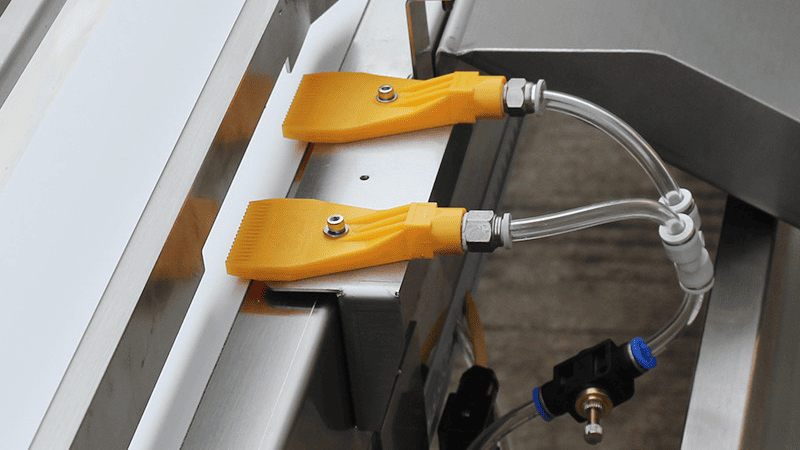
● Mechanical Deflection: The physical actuator—such as a pneumatic pusher arm, air jet nozzle, drop belt, or flipper arm—engages and diverts the defective product into a locked bin or dedicated secondary conveyor.
When a rejection error occurs, it generally falls into one of two distinct failure modes: Complete Inaction (No Reject Movement) or Operational Anomalies (Mistimed Rejection, False Rejects, or Incomplete Physical Deflection). Below, we analyze both modes in rigorous detail.
3. Failure Mode 1: Complete Rejection Inaction (No Movement)
When an out-of-tolerance item triggers a red light or screen alarm on the control panel, but the mechanical rejector remains entirely motionless, the breakdown lies in signal transmission, electrical actuation, or basic power supply.
Step 1: Verify I/O Signal Mapping and Port Configurations
Modern dynamic checkweighers feature programmable I/O channels that allow operators to assign different reject actions to under-weight, over-weight, or metal-contaminated items. A frequent root cause following routine system updates or recipe changes is improper I/O port mapping. Access the system diagnostic menu on your controller and verify that the active rejection routine is correctly assigned to the physical output terminal connected to the solenoid valve.
Step 2: Perform Manual I/O Diagnostics & Voltage Testing
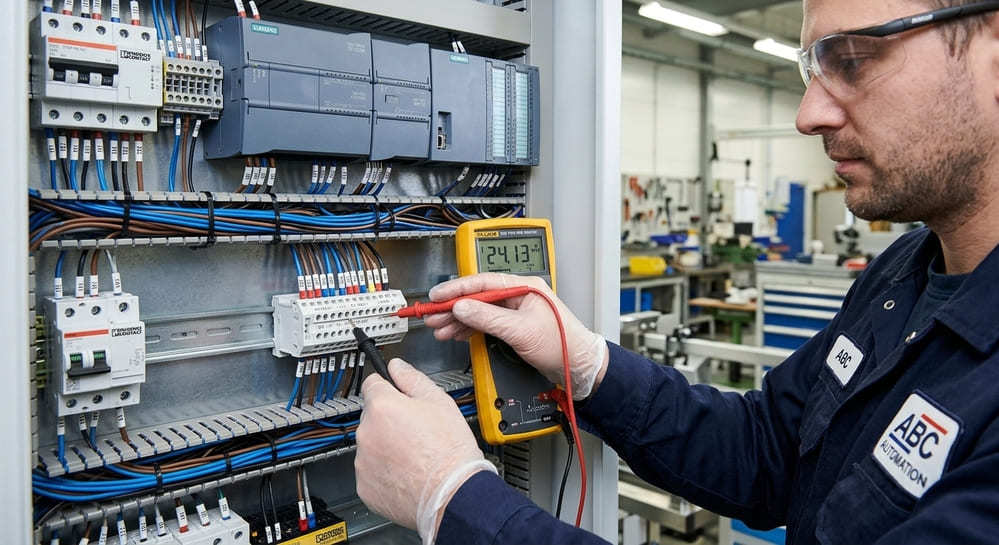
Navigate to the hardware test interface on the machine HMI. Manually trigger the rejection output bit while monitoring the physical controller output LED and measuring voltage across the output terminals using a calibrated digital multimeter. Under normal operating conditions, the terminal should deliver a stable DC 24V (±10%). If the LED illuminates but no voltage is present at the solenoid harness, inspect for blown fuse links, damaged wiring harnesses, or loose terminal screws.
Step 3: Inspect Solenoid Valve Coil Integrity
If DC 24V power reaches the solenoid connector but the pneumatic valve fails to shift, test the solenoid coil for electrical continuity. Continuous high-cycle operation in humid or dusty plant environments can lead to coil burnout or internal plunger binding. Resistance testing across the coil terminals should match factory specification ohms; an open circuit indicates a burned coil requiring immediate replacement.
4. Failure Mode 2: Abnormal Rejection, Mistiming, and Partial Deflection
A far more treacherous issue occurs when the rejection mechanism fires, but fails to successfully clear the non-compliant product from the line—or worse, inadvertently knocks good packages off the conveyor. This behavior points to mechanical, pneumatic, or timing synchronization flaws.
Factor A: Pneumatic Supply Pressure and Air Quality
Pneumatic pushers, air blast nozzles, and drop-flap rejectors demand clean, dry, and regulated compressed air. If working pressure drops below 0.4 MPa to 0.6 MPa (4 to 6 bar), the mechanical response becomes sluggish, preventing the actuator from extending fully before the fast-moving package passes by. Furthermore, moisture or particulate contamination in unfiltered plant air causes internal corrosion and spool sticking in pneumatic directional valves.
Factor B: Rejection Delay and Duration Parameter Calibration
Automated weight inspection systems rely on two critical timing parameters: Rejection Delay Time (the time elapsed between photo-eye product detection and actuator engagement) and Rejection Hold/Pulse Duration (the duration the actuator remains extended). If conveyor belt speed changes or belt slippage occurs without speed compensation, static delay settings will cause mistimed strikes. Ensure your line speed is accurately synchronized via encoder feedback.
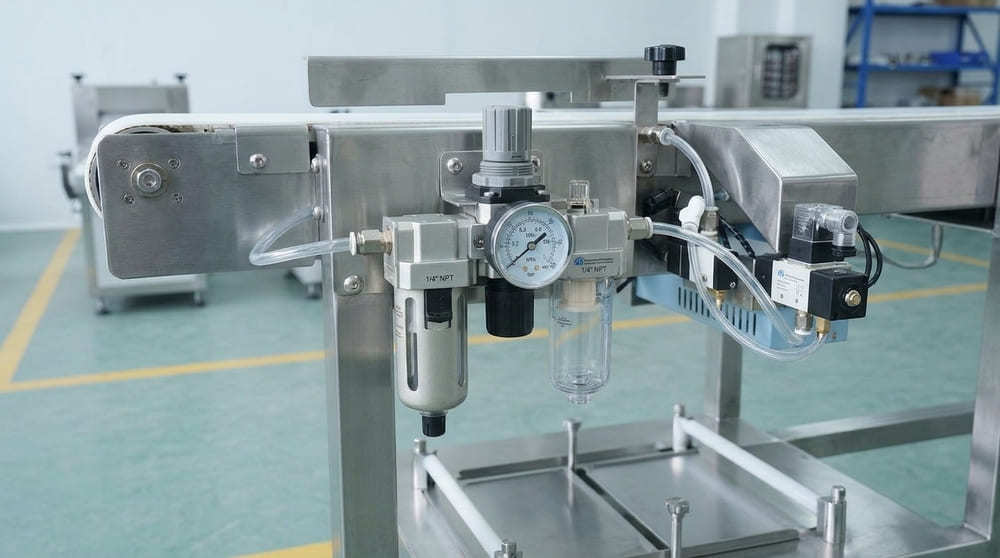
Factor C: Optical Sensor Positioning and Product Spacing
If packages are fed onto the weighing belt too close together, the rejection stroke intended for an off-weight container will strike the trailing edge of a preceding good package or the leading edge of a trailing package. Maintaining proper package pitch and ensuring optical sensors are free from dust buildup or ambient reflection interference is essential for continuous accuracy.
5. Preventative Maintenance Checklist for Peak Checkweigher Reliability
To eliminate unexpected downtime and guarantee 100% rejection reliability, maintenance teams should execute a routine preventative checklist across daily, weekly, and monthly operational shifts:
| Frequency | Inspection Focus | Action Required | ||
Daily (Per Shift) | Pneumatic Air Supply & Optical Photo-eyes | Verify inlet pressure >= 0.5 MPa; drain water trap; clean optical lenses with soft lint-free cloth. | ||
| Weekly | Solenoid Valve & Rejection Mechanism Test | Execute manual I/O diagnostic test; inspect pusher arm pads, pivots, and air blast nozzles for wear. | ||
| Monthly | Conveyor Belt Alignment & Encoder Tracking | Check conveyor belt tension, belt tracking, and drive pulley wear to ensure zero speed deviation. | ||
| Quarterly | Full Audit & Validation Testing | Pass certified test weights across the weighing belt at full line speed to validate 100% reject execution. | ||
6. Engineered for Zero-Defect Quality Control: The SameGram Advantage
At SameGram, we engineer dynamic weighing and product inspection solutions built to withstand the harshest industrial production environments. As a leading manufacturer specializing in dynamic checkweighers, weigh price labelers, combination weighers, gravity fall metal detectors, SameGram integrates advanced self-diagnostic software and heavy-duty hardware into every system we build.
Our dynamic checkweighers feature intelligent auto-learning algorithms, real-time pneumatic pressure monitoring, high-speed DSP processing, and fail-safe reject confirmation sensors that automatically stop the conveyor if a defective package is detected but fails to reject. This eliminates unrejected off-weight packages from ever slipping through your quality gates.
Quality, compliance, and international safety standards form the backbone of SameGram engineering. Our equipment holds rigorous international certifications, ensuring fully compliant integration into automated facilities worldwide. You can explore our verified technical compliance documentation and international certificates directly:
Whether you need to upgrade an existing packaging line, implement high-speed weight verification, or customize an integrated metal detector and checkweigher combination system, SameGram provides end-to-end engineering support, tailored solutions, and responsive technical service. Discover our full range of automated inspection equipment by exploring our dedicated Solutions and Industry Applications Center to find the exact configuration designed for your production line.
AUTHOR & INDUSTRY INSIGHTS
Author: Tony, Founder & CTO, SameGram
"At SameGram, every innovation starts with listening — to machines, to data, and most importantly, to our customers."
About the Author: Tony leads product design, R&D engineering, and technical innovation at SameGram. With over two decades of industrial automation experience, he specializes in high-speed dynamic weighing systems, DSP digital signal filtration, and automated quality control integration for global manufacturing enterprises.
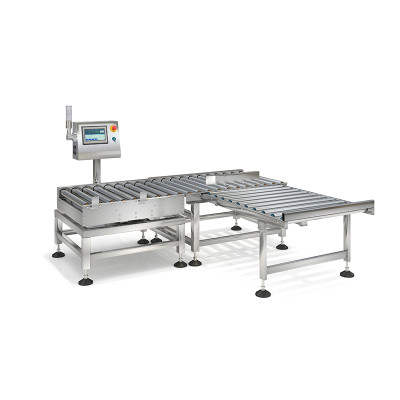
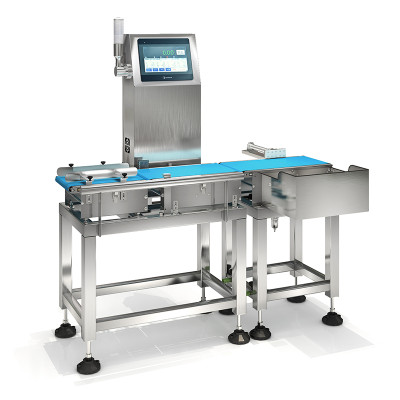
Hot-Sale Dynamic Checkweigher
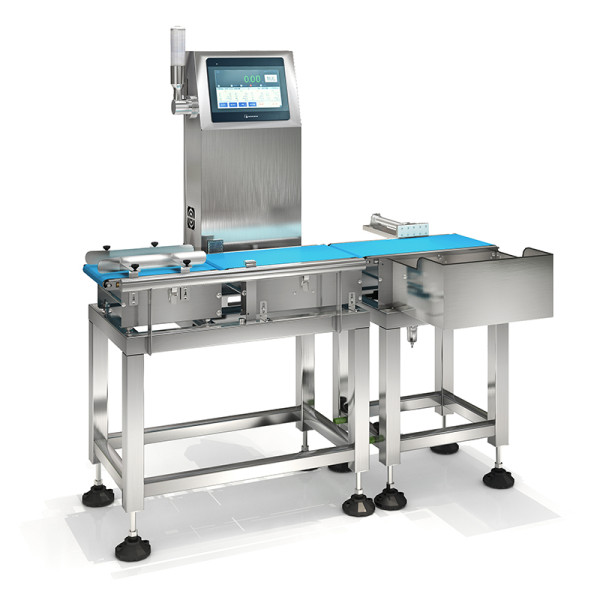
SCF-4523L3 is a hygienic food checkweigher with high precision and hi speed checkweighing for food industry,easy to integrate

SC1-H-3512L1 is a high precision checkweigher designed for production line with high precision needs like pharmaceuticals etc.
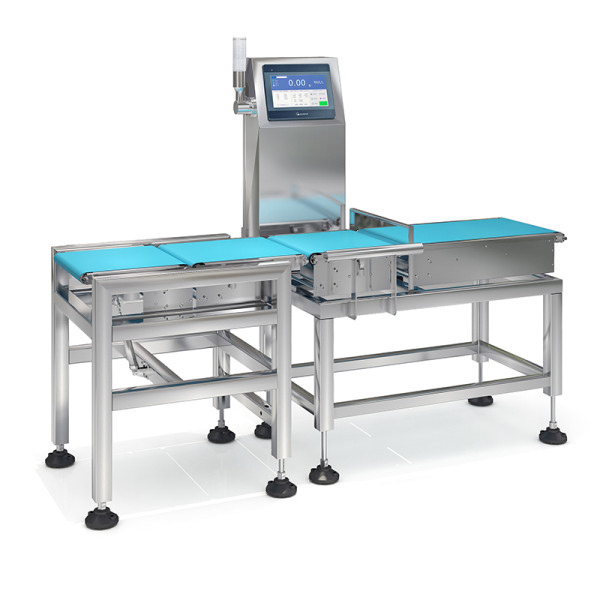
SC1-5040L5 is an economy and dynamic hi speed checkweigher ideal for in line weight checking with precision and reliability.
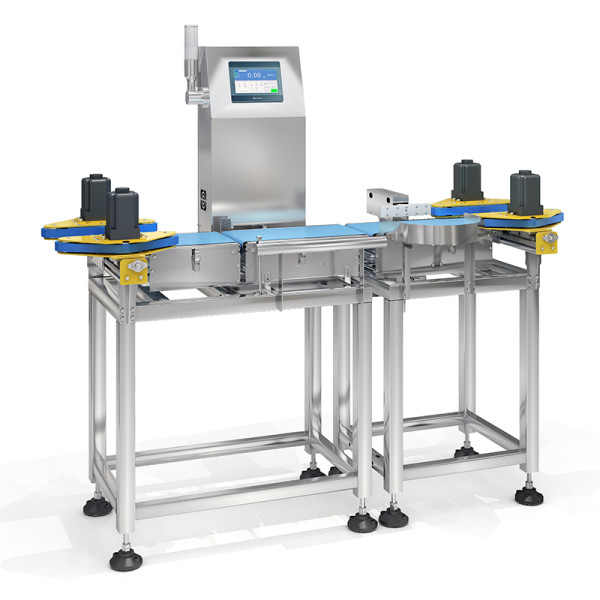
SC-C is a can checkweigher designed for cans,jars and bottles,which is a reliable online checkweigher for production line.

SC3-8050L30 is a high-capacity dynamic checkweigher for packages up to 30 kg. This machine is very economical and widely used.